
BIBLES NET. COM
Back to Bibles Net. Com
THE BIBLE IN ITS MAKING
The most Wonderful Book in the World
THE BIBLE IN ITS MAKING
The most Wonderful Book in the World
BY
MILDRED DUFF AND NOEL HOPE
COMPANION VOLUME TO
‘Where Moses went to School,‘
‘When Moses learnt to Rule,‘
‘Esther the Queen,‘
‘Daniel the Prophet,’ and
‘Hezekiah the King.‘
ILLUSTRATED BY NOEL HOPE
With Sketches of the Original Monuments and Stone Pictures
MARSHALL BROTHERS, LTD.,
PUBLISHERS,
LONDON, EDINBURGH & NEW YORK
1912
Uniform with this Volume
PRICE ONE SHILLING
Where Moses went to School
Where Moses learnt to Rule
Esther the Queen
Daniel the Prophet
Hezekiah the King
All fully Illustrated
MARSHALL BROTHERS, LTD.,
PUBLISHERS,
LONDON, EDINBURGH & NEW YORK
FOREWORD
One great universal law runs through the realm of nature. Our Saviour
gave it in a sentence: ‘First the blade, then the ear, after that the
full corn in the ear.’
It is with the desire to show that the same law rules in another of
God’s creations—The Bible—that this little volume has been prepared.
The Bible has as literally ‘grown’ as has an oak tree; and probably
there is no more likeness between the Bible as we know it to-day and
its earliest beginning, than we find between the mighty tree, and the
acorn from which it sprang.
The subject is so vast that we have not attempted anything beyond the
briefest outline. Our purpose has been merely to give some idea of the
origin of the Bible books, up to the measure of our present light upon
the subject, and also to show the purpose for which they were written.
But if our readers, by seeing something of the wonder and glory of the
Holy Scriptures, are able to catch a glimpse of the Creator’s mind
behind the whole, our work will not have been in vain.
MILDRED DUFF.
CONTENTS
THE BIBLE IN ITS MAKING
CHAPTER I
A LIVING BOOK
here is only one Book that never grows old.
For thousands of years men have been writing books. Most books are
forgotten soon after they are written; a few of the best and wisest are
remembered for a time.
But all at last grow old; new discoveries are made; new ideas arise;
the old books are out of date; their usefulness is at an end. Students
are the only people who still care to read them.
The nations to which the authors of these first books belonged have
passed away, the languages in which they were written are ‘dead’—that
is, they have ceased to be used in daily life in any part of the world.
Broken bits and torn fragments of some of the early books may be seen
in the glass cases of museums. Learned men pore over the fragments,
and try to piece them together, to find out their meaning once again;
but no one else cares much whether they mean anything or not. For the
books are dead. They cannot touch the heart of any human being; they
have nothing to do with the busy world of living men and women any more.
Now, our Bible was first written in these ancient languages: is it,
therefore, to be classed among the ‘dead’ books of the world?
No, indeed. The fact alone that the Word of God can be read to-day in
412 living languages proves clearly that it is no dead book; and when
we remember that last year 5,000,000 new copies of the Bible were sent
into the busy working world for men and women by one Society alone, we
see how truly ‘alive’ it must be.
Nations may pass, languages die, the whole world may change, yet the
Bible will live on. Why is this?
Because in the Bible alone, of all the books seen on this earth, there
is found a message for every man, woman, or child who has ever lived or
will live while the world lasts:
It is the Message of God’s Salvation through His Son Jesus Christ.
The message is for all; for the cleverest white man, the most ignorant
savage; for the black man of Africa, the yellow man of China, the tawny
little man who lives among the icefields of the Arctic Circle.
It does not matter who the person is, nor where he lives; a living
force exists in the Bible that will help every human being who acts
upon its words to become one of God’s true sons and soldiers. No human
wisdom can explain this.
The Bible tells us about Christ. Before Christ came all teaching led
up to Him. He is the only safe Guide for our daily life. Through His
death alone we have hope for the future. From the first page to the
last the Bible speaks of Christ. This is the secret of its wondrous
power.
‘These are the words which I spake unto you, while I was yet with you,
that all things must be fulfilled, which were written in the law of
Moses, and in the prophets, and in the Psalms, concerning Me.‘ (Luke
xxiv. 44.)
Although we speak of the Bible as one Book, because it tells one
world-wide story, yet this one Book is made up of many books—of a
whole library of books in fact.
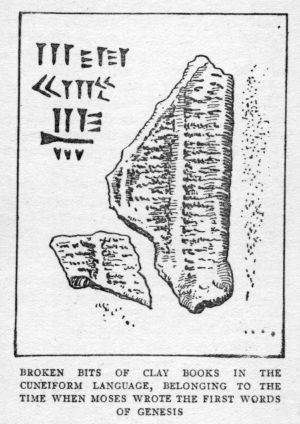
BROKEN BITS OF CLAY BOOKS IN THE CUNEIFORM LANGUAGE, BELONGING TO THE TIME WHEN MOSES WROTE THE FIRST WORDS OF GENESIS
Go into a library, look at the well-stocked shelves. Here is a volume
of history, here a book of beautiful poetry, here a life of a great and
noble warrior. This book was written only last year, this one appeared
many years before you were born.
Just so is it with the books of the Bible.
For more than a thousand years God was calling the best and wisest men
of the Jewish nation to write for His Book. Some of the authors were
rich and learned; many were humble and poor. Kings wrote for it; a
shepherd-boy; a captive lad who had been carried away as a slave into a
strange land; a great leader; a humble fruit-gatherer; a hated
tax-collector; a tent-maker; many poor fishermen. God found work for
them all.
There are sixty-six books in the Bible, written by at least forty
different authors. Books on history; collections of sacred songs;
lives of good men and women; stirring appeals to the sinful. God chose
the men best fitted to write each part. He called them to His work; He
spoke to their hearts; He put His Spirit into their minds.
In these days those who read God’s Word often forget what old, old
writings the first books in the Bible are, and how everything has
changed since they were written.
Seeing the words so clearly printed on fine white paper, readers do not
stop to think that they have come down to us from the days when the
greatest nations in the world wrote their best books on lumps of clay,
or on rough, brittle paper made from brown reeds.
So these Bible readers grow impatient, and because they cannot
understand everything all at once, some are even foolish enough to give
up reading the Old Testament altogether.
But the things that are hard to understand are only hard because we are
still so ignorant. Whenever any new discovery about the ancient times
has been made it has always shown us how exactly true the Bible is.
Some years ago, just at the time when the doubts and carpings were at
their worst, when those people who did not trust God even declared that
many of the cities and kings mentioned in the Old Testament had never
existed at all, a wonderful thing happened. God allowed the old cities
themselves to be brought to light once more.
Deep under the earth they were found, with their beautiful palaces,
libraries full of books, and long picture-galleries, lined from end to
end with stone and marble slabs, on which were cut portraits of the
very kings whose existence the people were beginning to doubt! This is
how it happened.
‘The Bible does not describe things as they really were,’ said some
people. ‘In Old Testament times, for instance, the nations were very
rough and ignorant; as for Moses—who is supposed to have written the
first books of the Bible—it is most doubtful whether he ever learned
to read and write at all.’
‘But Moses was brought up in Egypt, and the Egyptians were very
learned; the Bible says so,’ answered others.
‘The man who wrote those words in the Bible may have made a mistake.
It is true that the ruins of old Egyptian temples and palaces are
covered with strange figures and signs; but who can say now whether
they mean anything or not?’
Those who trusted in God’s Word could not answer these questions; but
just at this time God allowed the first great discovery to be made; for
the moment had at last come when all thoughtful men and women needed to
be able to settle these questions for themselves.
In the year 1799 a French officer who was in Egypt with Napoleon’s army
discovered the Rosetta Stone.
You may see this stone in the British Museum. It is a great block of
black marble. On the smooth side, cut deeply in the stone, are a
number of lines of ancient writing. Many stones covered with ancient
writing had been found before, but this one is different from all the
rest.
The lines at the top of the stone are in the strange old Egyptian
picture-writing, which learned men have agreed to call ‘Hieroglyphic’;
that is, ‘writing in pictures.’ This was a very special kind of
writing in ancient Egypt, and generally kept for important occasions.
The lines in the middle give the same words, but in the ordinary
handwriting used for correspondence in ancient Egypt; and last of all
is found a translation of the Egyptian words written in ancient Greek.
This old kind of Greek is not spoken in daily life by any people
to-day, but many learned men can read and write it with ease; so that,
you see, by the help of the Greek translation, the Rosetta Stone became
a key for discovering the meaning of both kinds of ancient Egyptian
letters. Thus, by the help of the Rosetta Stone, and after years of
patient labour, the long-dead language could be read once more.
Egypt—the land into which Joseph was sold, where the Israelites became
a nation, and Moses was born and educated! How great a joy to read the
words carved on temple walls, or in palace halls; and to find with each
word read how exactly the Egypt of ancient days is described in the
Bible!
The dress the people wore, the food they ate, the way they spoke to
their kings, the description of their funerals, the very name of their
famous river, and the words they used to describe the plants, insects,
and cattle of Egypt—all these are found in the Bible and are proofs of
the care with which Moses wrote of the land of his birth.
But other nations besides the Egyptians are mentioned in the Bible; and
about them also grave doubts arose. Almost all the Old Testament
prophets cried out against the wickedness of Assyria and Babylon, and
foretold the awful punishment which God would bring upon them for their
pride and cruelty, unless they repented.
They did not repent; destruction came upon them; their very names were
forgotten, and their cities as utterly lost to the world as though they
had never existed.
‘Nineveh, Babylon? There were such cities once, perhaps; but as for
the kings of whom the Bible speaks—Sennacherib, who came up against
Jerusalem, and was driven back through the prayers of God’s servants,
Isaiah and King Hezekiah (2 Kings xviii. 19); Nebuchadnezzar, who
carried Daniel away into Babylon; Ahasuerus, who reigned “from India
even unto Ethiopia” (Esther)—well, if they ever lived at all, they
were certainly not the kind of kings spoken of in the Old Testament.
But it all happened so long ago that we cannot expect to understand
much about it now.’
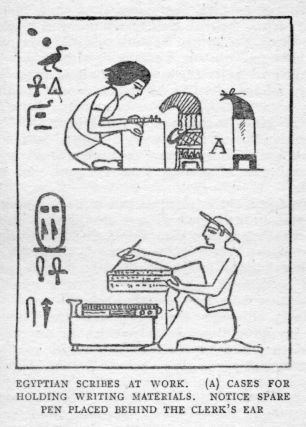
EGYPTIAN SCRIBES AT WORK. (A) CASES FOR HOLDING WRITING MATERIALS. NOTICE SPARE PEN PLACED BEHIND THE CLERK’S EAR
So the questioners settled the matter in their own minds; but God had
the answer to their questions all ready for them.
He put into the hearts of some brave men the idea of going out to the
desolate plains, ‘empty and void, and waste‘ (Nahum ii. 10), the
plains that had once been the rich empires of Assyria and Babylon, and
there to search patiently for some trace of the splendid cities of old.
Very wonderful is the story of how these searchers found them.
Nineveh had been lying buried under huge mounds of rubbish for more
than two thousand years. Now, just at the time when her testimony was
needed, the ruined halls of her majestic palaces were once more brought
to the light of day.
What had been the names of these grim kings of old, whose stern-faced
figures were sculptured on the walls? Could any among them be the
fierce Assyrian kings mentioned in the Bible?
If only the strange wedge-shaped letters that covered every vacant
space on the stone slabs could be read, what a message from the past
they would reveal.
Once again clever men set to work and persevered until the strange
letters were deciphered, and the palace-walls gave up their secrets.
Here was King Sennacherib; here Tiglath-pileser (2 Kings xv. 29); here
Esarhaddon (2 Kings xix. 37). Oh, how wonderful to look at the
old-time portraits which had been drawn from the men themselves!
‘Well, although the Egyptians and Assyrians prove to have been great
nations in the time of Moses, they had no communication with each other
except in war time; they spoke different languages, wrote in altogether
different styles, and had very different ideas about everything.
Nations kept to themselves in those days. What the Bible says of their
intercourse must be wrong.’
This all the clever people were quite sure about, but once again God
showed them their mistake.
Twenty-five years ago an Egyptian peasant woman was walking among the
ruins of an ancient Egyptian city—a city built before the time of
Moses. Bright yellow sand had drifted over the broken columns and
painted pavements of what had once been the palace of a great king.
But the peasant woman did not care for that. Was there anything hidden
in the sand that she could sell? This was all her thought.
Suddenly her foot struck against something hard in the sand. She
looked down. Could it be a stone?
No, it was not a stone, but a queer oblong lump, or tablet of clay,
hardened into a brick, and covered with strange marks that looked like
writing. She wondered at it, for with all her findings in the ruins
she had never come upon anything like this before.
She showed the tablet to her friends, and they dug down deep in the
sand, and found whole sackfuls of baked clay tablets. But when the
dealer in curiosities saw the lumps of baked clay he shook his head,
and would give very little money for them.
After a while some of the bricks were taken to Paris and London.
‘These tablets could not have been found in Egypt,’ decided the
learned professors; ‘they are either imitations, or they were found
somewhere else. These are clay letters, and must have been written in
Assyria or Babylonia. No Egyptian could have understood a word of
them.’
Yet the tablets had been found in Egypt, and had been read by the king
of Egypt’s scribes, for the peasant woman, had all unknowingly
discovered what remained of the Foreign Office belonging to the old
Egyptian nation, and thus we see that the Egyptians of Moses’ time
could read and write foreign languages as easily as we can to-day read
and write French or German!
CHAPTER II
THE SECRET OF ITS GREATNESS
od always chooses the right kind of people to do His work. Not only
so, He always gives to those whom He chooses just the sort of life
which will best prepare them for the work He will one day call them to
do.
That is why God put it into the heart of Pharaoh’s daughter to bring up
Moses as her own son in the Egyptian palace.
The most important part of Moses’ training was that his heart should be
right with God, and therefore he was allowed to remain with his Hebrew
parents during his early years. There he learned to love and serve the
one true God. Without that knowledge no education can make a man or
woman fit to be a blessing to the world.
But after this God gave him another training. The man who should be
called to write the first words of God’s Book would need a very special
education. Most likely some of the Children of Israel could read and
write, for we know there were plenty of books and good schools in
Moses’ time, but they certainly did not make such good scholars as the
Egyptians.
‘And the child grew and she (his mother) brought him unto Pharaoh’s
daughter, and he became her son.‘ (Exodus ii. 10.)
In those few words the Bible shows us the Egyptian side of Moses’
education.
And a very thorough education it must have been, for the Egyptians were
the most highly cultured people in the world in those days, and we know
that ‘Moses was learned in all the wisdom of the Egyptians.‘ (Acts
vii. 22.)
The Egypt of Moses’ time was very different from the Egypt of to-day.
Among all the great nations it held the first place; for the people of
Egypt were more clever, and rich; their gardens more beautiful, their
cornfields and orchards more fruitful than those of the dwellers in any
other land.
Again, of all the peoples in the world the Egyptians were looked upon
at that time as the most religious. From one end to another the land
was full of temples, many of them so huge in size, and so magnificent
with carvings and paintings, that even their poor ruins—the great
columns shattered or fallen, the enormous walls tottering and
broken—are still the wonder of the world.
Every great city had its schools and colleges. Clever men devoted
their whole lives to teaching in these colleges and to writing learned
books, just as they do in the cities of Europe and America to-day.
These men were called ‘scribes,’ that is, ‘writers.’ Moses, a boy
brought up in the royal palace, would have the best and most learned
scribes for his teachers.
A fragment of an old Egyptian book describing the duties of a lad in
the scribes’ school has been found. It tells how the schoolmaster
wakes the boys very early in the morning. ‘The books are already in
the hands of thy companions,’ he cries; ‘put on thy garments, call for
thy sandals.’
If the lad does not make haste he is severely punished; if he is not
attentive in school the master speaks to him very seriously indeed.
‘Let thy mouth read the book in thy hand, and take advice from those
who know more than thou dost!’
He has to write many copies, and as he gets he learns to compose
business letters to his master; before he is fourteen he is most likely
a clerk in a government office, and must continue his studies at the
same time.
The letters and copies of a schoolboy who lived three thousand years
ago have been discovered. How many bad marks did his teacher give him,
do you think, when he had to correct that carelessly written capital?
SCHOOLBOY’S COPY FROM ANCIENT EGYPT. NOTICE THE TEACHER’S CORRECTIONS
So great a respect had the Egyptians for writing that they used to say,
‘The great god Thoth invented letters; no human being could have given
anything so wonderful and useful to the world.’
Arithmetic, geometry, astronomy, drawing, an Egyptian lad was supposed
to study all these, and as we have seen, those lads who were trained
for work in the Foreign Office had to learn other languages as well;
they had also to read and write ‘cuneiform’—the name given to the
strange wedge-shaped letters of Assyria and Babylonia.
All the letters from the people of Canaan to the Egyptian king and his
Foreign Office were written in cuneiform.
Chinese is supposed to be the most difficult language to learn in our
day; but the ancient cuneiform was certainly quite as complicated as
Chinese. The cuneiform had no real alphabet, only ‘signs.’ There were
five hundred simple signs, and nearly as many compound signs, so that
the student had to begin with a thousand different signs to memorize.
Yes, boys had their troubles even in those days.
Now, as Moses grew older and learned more, he must often have felt very
thoughtful and sad. So many books, so many ideas, so many stories of
cruel gods and evil spirits—where was the truth to be found? No one
seemed to remember the One True God, the God of his fathers, Abraham,
Isaac, and Jacob.
Very likely a Babylonian book written in cuneiform, and pretending to
describe the Creation of the world, and the story of the Ark and the
great Flood found its way into Egypt. Many copies of this book existed
in Moses’ day; part of a later copy was found a short time ago in the
ruins of the library of a great Assyrian king, and is now to be seen in
the British Museum. A strange book it is. The words were not written,
remember, but pricked down on a large flat tablet of clay.
If Moses read such a book as this, it must have troubled and puzzled
him very much. For it is a heathen book, in which the beautiful clear
story of the Creation of the world is all darkened and spoilt. The
Babylonian who wrote the book, and the Assyrians who copied it, were
all descended from Noah, and therefore some dim remembrance of God’s
dealings with the world still lingered in their hearts; but as the time
passed they had grown farther from the truth. That is why the oldest
copies of these books are always the best; the heathen had not had time
to separate themselves so completely from God.
‘In the old, old days,’ they said, ‘there were not so many gods as
there are now’; and some of the most learned heathen even believed that
in the beginning there was but one God. ‘Afterwards many others sprang
up,’ they declared.
‘In the beginning God created the Heaven and the earth.‘ (Genesis i.
1.) Oh, how far the nations had wandered already from the greatest,
deepest truth which the world can know! How sad to think that horrible
nightmare stories of evil spirits and cruel gods should have come
between men’s souls and the loving Father and Creator of all!
Yes; it was time, indeed, that the first words of the Bible should be
written, and that a stream of pure truth should begin to flow through
the world.
But Moses had much to do for God before he could write one word of his
part of the Bible.
We know how his life of learning and splendour came to a sudden end; he
fled from Egypt, and became a shepherd in the land of Midian; and there
in Midian God called him to the great work of leading the Children of
Israel out of Egypt towards the Promised Land.
Terrible troubles had come upon God’s people in the land of Goshen.[1]
For the most selfish and cruel Pharaoh who ever reigned over Egypt had
determined to treat the people who had come to live in Egypt, at the
invitation of a former Pharaoh, just as though they were captives taken
in battle.
Many of the old ruins in Egypt are covered with writings describing his
cruelties. He killed all who rebelled against him, and condemned whole
nations to wear out their lives by working for him in the gold mines,
or granite quarries, or by making endless stores of bricks; he cared
for no man’s life if only he could be called the richest king in the
world.
‘And they built for Pharaoh treasure cities, Pithom and Raamses,‘
(Exodus i. 11) that is, store-cities. In Egypt many store-cities were
needed because corn was more plentiful there than in any other country.
‘Pithom—where was Pithom?’ So people were asking a few years ago, and
because there was no answer to that question they began to doubt. Had
there ever been such a city?
But in the year 1884 the earth gave up another of its secrets—the
ruins of Pithom were found, buried deep in the dust; and the remains of
great store-houses built of rough bricks, mixed with chopped straw
(Exodus v.) and stamped with the name of the cruel Pharaoh (Ramesis
the Second) were laid bare once more.[2]
What a pity some readers had not waited a little longer before doubting
the truth of the Bible!
‘And the Lord said unto Moses, Write thou these words.‘ (Exodus
xxxiv. 27.) So it was at last that God called Moses to begin the great
work of writing the Bible, just as He had called him to lead the people
out of Egypt; just as by His Spirit He calls men and women to do His
work to-day.
How did Moses write the first words of the Bible? What kind of letters
and what language did he use?
These are great questions. We know at least that he could have his
choice between two or three different kinds of letters and materials.
Perhaps he wrote the first words of the Bible on rolls of papyrus paper
with a soft reed pen, in the manner of the Egyptian scribes.
Hundreds of these rolls have been found in Egypt: poems, histories,
novels, hymns to the Egyptian gods; and some of these writings are at
least as old as the time of Moses. The Egyptian climate is so fine and
dry, and the Egyptians stored the rolls so carefully in the tombs of
their kings, that the fragile papyrus—that is, reed-paper—has not
rotted away, as would have been the case in any other country.
Certainly in after years the Jews used the same shaped books as the
Egyptians. Indeed, the Jews’ Bible—that is, the Old Testament—was
still called ‘a roll of a book‘ in the days of Jeremiah. (Jeremiah
xxxvi. 2.)
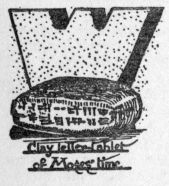
Or perhaps Moses wrote on tablets of clay like those used by the great
empires of Babylon and Assyria, and by the people of Canaan. Clay was
cheap enough; all one had to do was to mould moist clay into a smooth
tablet, and then to prick words on it with a metal pen. The prophet
Jeremiah mentions this kind of book also. (Jeremiah xvii. 1.)
Most likely, however, Moses wrote on parchment made from the skins of
sheep and goats. The Children of Israel kept large flocks, and could
supply him with as many skins as he wanted.
And in what language did he write?
Perhaps even the very first words were written in Hebrew; we know that
in later times the prophets and historians of the Jews wrote in Hebrew.
But we must remember that languages alter as years pass on. The Hebrew
of Moses’ time could only have been an ancient kind of Hebrew, very
different from the Hebrew of to-day. Does this surprise you? Why, you
and I could hardly read one word of the English written in England even
a thousand years ago!
About the middle of the last century a German missionary found a large
carved stone in that part of Palestine which used to be called Moab.
This wonderful stone, which is black and shaped something like a
tombstone, is covered with writing. It is called ‘The Moabite Stone,’
and was set up by Mesha, king of Moab. (2 Kings iii. 4.) The writing
on it is neither Egyptian nor cuneiform, but a very ancient kind of
Hebrew.
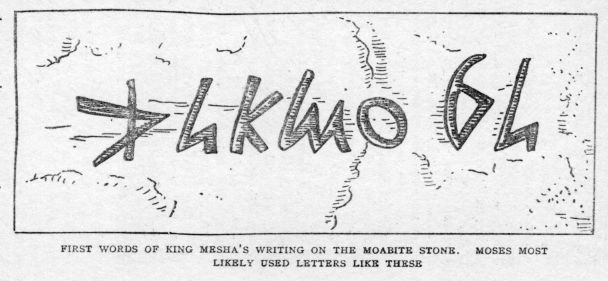
FIRST WORDS OF KIN MESHA’S WRITING ON THE MOABITE STONE. MOSES MOST LIKELY USED LETTERS LIKE THESE
Of course, this does not take us back actually to the days of Moses,
but still it is so old that Moses may well have used the same kind of
writing.
We have seen that most nations in those old times had their books, and
we know that each nation had always one book that it valued more than
the rest. This was the book that told the people about their religion,
and the gods in whom they believed.
In most of these books some grains of truth were found. All the
nations of the world are but one great family, you know, and even the
most ignorant people were not without some knowledge.
The heathen nations of Moses’ time therefore remembered dimly some of
God’s dealings with the world; they were so blinded by their heathen
worship, that no atom of fresh light could reach them, and little by
little they drifted further into the darkness.
But, though tiny fragments of truth are to be found in their books, not
one word is to be traced in any book of the most precious truth of all
until God revealed it to His servant Moses.
This makes our Bible so wonderful and different from all other books:
it is a revelation—that is, something which comes to us from God and
which we could never have known without His help.
From first to last the Bible is written to teach us about Christ.
Throughout the whole of the Old Testament Christ is referred to as the
coming Saviour, or Messiah, which you know, is the Hebrew word for
Christ.
Christ is to bruise the serpent’s head. (Genesis iii. 15.) In Him all
the nations of the earth are to be blessed. (Genesis xxii. 18.) He is
the Star that shall come out of Jacob. (Numbers xxiv. 17.) When the
Lamb of the Passover was killed, and the people taught they could only
escape from death through the sprinkled blood, this was a type or
picture of Salvation through the Blood of Jesus.
When at last the Saviour came, the Jews rejected Him and would not
accept Him as the Messiah. Then He said to them: ‘Had ye believed
Moses, ye would have believed Me: for he wrote of Me.‘ (John v. 46.)
[1] The Egyptians spelt ‘Goshen’ ‘Kosem.’ An old writing says, ‘The
country is not cultivated, but left as a pasture for cattle because of
the stranger.’
[2] Some of these bricks are in the British Museum.
CHAPTER III
MOSES AND HIS WRITINGS
e now begin to understand a little of the very beginning of God’s
Book—of the times in which it was written, the materials used by its
first author, and the different kinds of writing from which he had to
choose; but we must go a step farther.
How much did Moses know about the history of his forefathers, Abraham
and Jacob, and of all the old nations and kings mentioned in Genesis,
before God called him to the great work of writing his part of the
Bible?
We believe that he knew a great deal about them all.
Most thoughtful young people like to read right through their Bibles,
and perhaps you have been perplexed to find that many parts of the Old
Testament are both puzzling and dry. Of what use, then, can these
chapters be? you have perhaps asked yourself. Is it not all God’s Book?
But you must not let this trouble you. Every passage, every verse has
its special place and object. Not a line of God’s Book could be taken
away without serious loss to the whole.
‘What, all those long lists of the queer names of people we never hear
of again?’ asks some one. ‘Why, I dread those chapters. I once had to
read Genesis x. aloud, and I shall never forget it!’
Those who feel like this will be surprised to know that many of the
most learned men of our own days are giving much time and thought to
the careful and patient study of this very list of names; and the more
carefully they study it, the fuller and wider does the subject become.
‘Babel, and Erech, and Accad, and Calneh, in the land of Shinar.‘
(Genesis x. 10.) The ruins of all these great cities and kingdoms have
now been found. They were old before Moses was born; indeed, they were
so old that their names were only to be found in ancient books; even
the very language spoken by some of these nations had been forgotten by
all save the learned scribes of Babylonia and Assyria.
And yet we find these names accurately given in Genesis; had they been
missing from its pages, the Bible would give us no true idea of the
beginnings of history. Remember this when next you are tempted to feel
impatient at the awkward syllables.
Again, in Genesis xiv. we read the names of the kings who governed nine
nations in the time of Abraham, and of how they fought together ‘four
kings with five‘ (verse 9) three hundred years before Moses was born.
Until a very few years ago the Bible was the only Book that told us
about these ancient kings and kingdoms.
And people said, ‘The man who wrote that chapter did not really know
anything; he just collected a pack of old stories that had been
repeated over and over again with so many exaggerations and alterations
that at last there was scarcely a word of truth left in them.’
Since this foolish conclusion was arrived at many new discoveries have
been made, the broken fragments of old tablets have been pieced
together and read, and the names of all the nine kings brought to light
once more.
Certain it is that Moses, with the help of the writings which we now
know must have existed in his time, would have but little difficulty in
writing those parts of Genesis which tell us the history of some of the
most ancient nations of the world. For when God gives a man some work
to do, He always helps him to do it. To those who really trust Him,
and have patience to work on, the help they need always comes, the
difficult path is made smooth. This has been the experience of God’s
servants in all times.
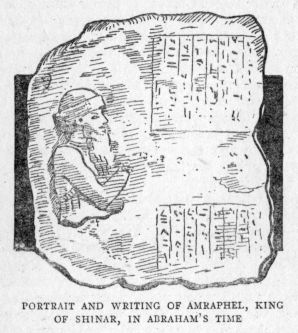
PORTRAIT AND WRITING OF AMRAPHEL, KING OF SHINAR, IN ABRAHAM’S TIME
Many letters and books belonging to the reign of ‘Amraphel[1] king
of Shinar‘ (Genesis xiv. 1) have lately been found. He was one of the
wisest heathen kings who ever lived, and the writings of his times are
very interesting, because they bring us quite back to the days of
Abraham.
Amraphel kept written records describing the splendid temples he built,
and a great embankment which he made to keep the river Tigris from
flooding his people’s cornfields; but the wisest thing he did was to
collect and write out a long list of all the laws by which he governed
the land of Shinar. Thus he worked in very much the same kind of way
for Shinar that our own King Alfred did, thousands of years later, for
England.
This list of laws was found in 1901. They are engraved on a great
block of black marble, and are so numerous that they would fill pages
of our Bible.
They are wise and just as far as they go. There is a great deal about
buying and selling in them, and the lawful way of conducting different
kinds of business; but they are wholly different from those wonderful
Commandments which God gave to the Children of Israel three hundred
years later.
For Shinar’s laws were the heathen laws of a heathen king; in them
there is no word of God; no word even of the heathen gods in which
Amraphel believed.
‘Thou shalt love the Lord thy God … and thy neighbour as thyself.‘
(Luke x. 27.) In these words Jesus Christ gives to us the true meaning
of the Commandments which Moses wrote down in our Bible.
Again, until quite lately many people were certain that there could
never have been a king like Melchizedek, the king of Salem, who came
and blessed Abraham, and of whom we read in Genesis xiv. and also in
Hebrews vii.
But among the letters found in the Foreign Office of the king of Egypt,
is one from the king of Salem. Not from Melchizedek, but from another
king of Salem, who describes himself in these words: ‘I was set in my
place neither by father nor mother, but by the Mighty King‘—meaning
‘by God.’ Read what is said about Melchizedek in Hebrews vii. These
words show us that all the kings of Salem believed that they owed
everything to God. This is why Abraham honoured Melchizedek so highly.
‘Salem—that is, peace. ‘Jeru-salem‘ means city of peace. So, as
we see from these ancient letters, Jerusalem was called the city of
peace even in the days of Abraham.
All these old records and many more Moses must surely have seen; the
cities of Canaan were as full of books as were those of Egypt and
Babylonia, for the name ‘Kirjath-sepher‘ (Joshua xv. 15) means ‘City
of Books.’
Thus, as year by year new discoveries are made, we realize more clearly
the kind of preparation which Moses had for his great work, and the
sources from which he gathered much of his information. Yet no single
word of the Bible is copied from the heathen writings.
No; just as a man who decides to give his whole life to God to-day
uses, in the Lord’s service, the knowledge he gained before he was
converted; so, after God called Moses to his great work, all the
learning and wide knowledge he had gathered during his life were
dedicated to the service of God, and used by His Holy Spirit.
We do not know—we are nowhere told—whether Moses wrote every word of
the ‘Books of the Law.’ The Jews believed that every letter, every
tiniest dot was his. It may well have been so, as we have seen.
But, again, he may very likely have had helpers and editors; that is,
people who arranged and copied his original writings.
But the Children of Israel always called the first five books of the
Bible ‘The Torah’; that is, ‘The Law’; and they looked upon these as
their most precious possession, something quite above and apart from
every other writing—Jehovah’s direct words and commandments to His
people.
At last the life-work of Moses was done, and Joshua took his place,
called by God to lead the people forward. But the new leader found
himself at once in a very different position. When Moses brought the
Children of Israel out of Egypt they were without a Bible.
But in Joshua’s days the light had begun to shine, the river of the
knowledge of God to flow, and God was able, therefore, to say to His
servant Joshua:
‘This book of the law shall not depart out of thy mouth; but thou
shall meditate therein day and night, that thou mayest observe to do
according to all that is written therein: for then thou shall make thy
way prosperous, and then thou shall have good success.‘ (Joshua i. 8.)
We are not told who was called by God to write the Book of Joshua; we
think that Joshua wrote at least a part of it himself, but we all know
that it describes how the Israelites came at last into the Promised
Land, and drove out the wicked idol-worshippers.
Buried deep in the earth the remains of many old Canaanite cities have
been found.
Those of Lachish, the great Amorite city, are specially interesting.
We know how the Children of Israel dreaded the Amorite cities. ‘Great
and walled up to Heaven‘ (Deuteronomy i. 28), as the people said.
Yet, in spite of their great strength, Joshua took them one by one,
overthrew them, and afterwards built the Jewish towns upon their ruins.
This was the custom of conquerors with all these ancient cities, as the
excavators find to-day.
Now, in the remains of Lachish we can see its whole history. Three
distinct cities have been found, one below the other.
Deepest down of all, full sixty feet underground, are the enormous
walls of the Amorite city; great masses of rough brick forming huge
walls at least twenty-eight feet wide. No wonder the Children of
Israel, felt doubtful of victory!
Above the Amorite walls are the scattered fragments of rough mud-huts
and cattle shelters. The Israelites had no time to build anything
better until Canaan was conquered.
Above these again stand the ruined walls of a later Jewish city,
Lachish, as it was in the days of Solomon and the Jewish kings.
A fair city it must have been, built of white stone, the capitals of
some of the columns carved to resemble a ram’s horn, perhaps to remind
the people of the horns of the altar in the Tabernacle. But the walls
of the Jewish Lachish have none of the massive strength of the ancient
Amorite city.
Had we space we might pause over many of the other ancient Canaanitish
cities, for the subject is of absorbing interest, but perhaps we may
return to it in a later volume. Joshua, like all God’s true servants
past and present, made full use of the precious Book, and, ‘There was
not a word of all that Moses commanded, which Joshua read not before
all the congregation of Israel, with the women, and the little ones,
and the strangers.‘ (Joshua viii. 35.)
Before he died he spoke to the people very sorrowfully about their
sins. Many of them, in spite of God’s commandments and His favour and
love, had begun to serve the false gods of Canaan. The people repented
at the old leader’s earnest words, and they cried, ‘The Lord our God
will we serve, and His voice will we obey.‘ (Joshua xxiv. 24.) Joshua
made them promise to be steadfast. ‘And Joshua wrote these words in
the Book of the Law of God.‘ (Verse 26.) From this we see that Joshua
wrote a part, at least, of the Book that is called by his name.
People have often thought it strange that the Children of Israel should
again and again break God’s clear command, ‘Thou shall have no other
gods before Me.‘ (Exodus xx. 3.) How could they have been so foolish
as to care for false gods when the living God had done so much for them?
It is the old story. A man who has once given way to drunkenness is
not safe unless he puts strong drink out of his life for ever. If he
even touches it he is liable to fall back again into its power. So it
was with the Children of Israel. The worship of false gods had been
the terrible sin of their wilderness wanderings, and now to serve the
gods of Canaan became their strongest temptation.
The temples were so strange, so beautiful, the gods themselves so
mysterious, and then all was so easy, so pleasant! No stern
self-denial was needed; there were no difficult laws to keep; no
holiness was asked for. Drinking, feasting, and all kinds of
self-indulgence were part of the worship of Baal, and those who served
Ashtaroth, the goddess of beauty, might spend their whole lives in
wicked and degrading pleasures.
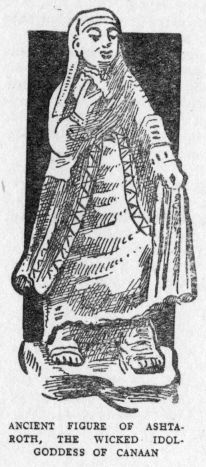
ANCIENT FIGURE OF ASHTAROTH, THE WICKED IDOL-GODDESS OF CANAAN
The backsliders of Israel found it only too easy to give up the
struggle for right, and to sink down into the horrible wickedness of
the heathen tribes around them.
Many people to-day are asking how a God of love and mercy could bid the
Israelites utterly to destroy the cities of Canaan, and to kill their
inhabitants, but the more we discover of these ancient tribes, the more
hopelessly depraved do we find them to have been. For centuries God
had been waiting in patience; the warning He had given to them through
Sodom’s swift destruction had been unheeded; now at last the cup of
their iniquity was full (Genesis xv. 16) and the Israelites were to be
His means of ridding the world of this plague spot.
In the Book of Judges we see how each time His people disobeyed His
command and copied the sins they were called to sweep away, God
punished them by letting their merciless neighbours rule over them,
till they loathed the bondage and turned once more to the living God.
Had Israel absorbed the vices of these nations instead of destroying
them, try to think what the world would have lost! The one channel
through which God was giving His Book to man would have become so
choked and polluted with vice that in its turn it also would have
become a source of infection and not of health.
[1] This king’s name is also spelt Hammurabi.
CHAPTER IV
THE HISTORY BOOKS
hus little by little the Book of God grew, and the people He had
chosen to be its guardians took their place among the nations.
A small place it was from one point of view! A narrow strip of land,
but unique in its position as one of the highways of the world, on
which a few tribes were banded together. All around great empires
watched them with eager eyes; the powerful kings of Assyria, Egypt, and
Babylonia, the learned Greeks, and, in later times, the warlike Romans.
How small and unimportant the Israelites appeared to the world then!
Yet we know that in reality they were greater than any people the world
had ever seen. God’s words have been fulfilled; through the Children
of Israel all the nations of the world are blessed.
The old empires have crumbled into dust; the great conquerors of
ancient days are forgotten; few people to-day remember the names of the
wise men of Greece and Rome, but our lives and thoughts are daily
influenced by the thoughts, words, and deeds of the Jews of old.
Abraham, Jacob, Moses, Samuel, David, Elijah—their very names are
nearer and dearer to us than those of the heroes of our own land.
When Queen Victoria was asked the secret of England’s greatness, she
held up a Bible. Their Sacred Book was all that the Jews possessed.
Their whole greatness was wrapped up in it. As the heathen truly said,
they were ‘The People of the Book.’
And now let us glance at the history books of the Bible. The first and
second Books of Samuel have been put together from several other
records. Most likely Samuel himself did part of the work. In Shiloh,
where he was educated, the old documents were kept, and Samuel, the
gifted lad, who so early gave his heart to God, was in every way fitted
to write the story of the Lord’s chosen people during his own life-time.
The Bible mentions several other histories that were written in these
days besides those which we know. ‘Now the acts of David the king,
first and last, behold, they are written in the book of Samuel the
seer, and in the book of Nathan the prophet, and in the book of Gad the
seer.‘ (These last have disappeared.) (1 Chronicles xxix. 29.)
Stores of books were being gathered. When, for instance, Saul was
chosen king, Samuel ‘wrote in a book and laid it up before the Lord.‘
(1 Samuel x. 25.) These books were most likely written on a rough kind
of parchment, made from the skins of goats, sewn together, and rolled
up into thick rolls.
The Books of Samuel are very precious to us, for in them we read nearly
all we know of the history of David the shepherd-king. Some of David’s
own writings are found in these books, but for most of them we have to
turn to the Book of the Psalms, which was the manual of the Temple
choir, and became the national collection of sacred poems. These
Psalms were composed by different authors, and at different times,
chiefly for use in the Temple, but the collection was founded by David,
and he contributed many of its most beautiful hymns.
David’s boyhood was spent among the rugged hills and valleys of
Bethlehem. As we read his Psalms we feel that the writer has passed
long hours alone with God, and the beautiful things which God has made.
Let us watch him for a moment. It is evening, and the young lad is
alone on the hills, keeping his father’s sheep The sun is sinking, and
all the earth is bathed in golden light. Even the sullen surface of
the Dead Sea reflects the glory, and the hills of Moab glow as though
on fire.
‘God is the Creator of all this beauty,’ thinks David. ‘Yes, bright as
is that golden sky, His glory is above the heavens.’ (Psalm viii. 1.)
Now the sun has quite gone; night’s dark curtain draws across the
world, the rosy glow fades from the hills. One by one the great white
stars shine out, and presently the moon rises. The young lad raises
his face, and gazes upward. ‘When I consider Thy heavens, the work of
Thy fingers, the moon and the stars, which Thou hast ordained‘ (Psalm
viii. 3) he murmurs; ‘how great is this mighty God, how far beyond all
the thoughts and ways of men! What is man, that Thou art mindful of
him?‘ (Verse 4.)
But God loves us even though we are lower than the angels. He has
crowned us with glory and honour. He has given all His beautiful
world, and all the wonderful things He has made, into our hands. ‘O
Lord (verse 4) our Lord, how excellent is Thy name in all the
earth.‘ (Verse 9.)
In Psalm xxix. David gives a word picture of a thunderstorm. He
describes the furious blast, the crashing thunder, the vivid lightning.
Many times as a young lad he had watched the black storm-clouds gather
over the hills and valleys of Bethlehem. He had no fear of the
tempest. God’s voice was in the wind; God’s voice divided the
lightning-flashes; God’s voice shook the wilderness. Yes, God would
make His people strong, even as the storm was strong.
And when the storm had passed, and the sun shone out once more over the
quiet hills, how clearly the words rose in David’s mind, ‘The Lord
will bless His people with peace!‘ (Verse 11.)
Solomon, David’s son, was the wisest king of ancient times. He wrote
many books, but only small fragments of them are found in the Bible; a
few Psalms, Solomon’s Song, and a collection Proverbs.
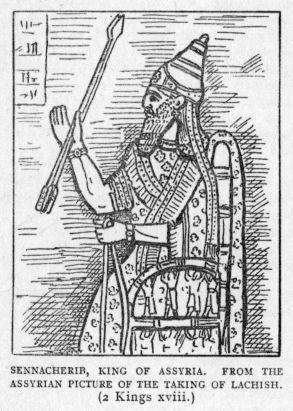
SENNACHERIB, KING OF ASSYRIA. FROM THE ASSYRIAN PICTURE OF THE TAKING OF LACHISH. (2 Kings xviii.)
For much of Solomon’s wisdom was of the earthly sort. He stood first
among all the learned men of his day. He would now be called a
‘scientific’ man. But all science which is limited to mere human
wisdom grows quickly out of date. The cleverest men of to-day will be
thought very ignorant in a few years.
Whereas David’s writings live. His love for God, and his faith in God,
made him able to write those words of trust and hope and praise which
are as sweet and fresh to-day as when they were written, and which go
right home to our hearts.
How many cold hearts have not David’s psalms warmed into life, how many
wounded spirits have they not comforted! There is not a grief or
anxiety in our lives to-day that could not be met and softened by the
words of the Jewish writer of long ago. Yes, the work done for God and
inspired by His Spirit never grows old.
And now, as we open the books of the kings, the great empires of the
days of old, of Assyria, Babylonia, Egypt, Persia, seem to start into
vivid life once more.
How strong they were—how terrible! What defence had the little
kingdom of Judah against such overwhelming power, such mighty armies,
such merciless rulers?
She had the best defence of all—God’s holy promises chronicled in His
Book. While her people loved and served their God they would be safe.
But, alas! they soon forgot to read and obey His Book, and neither
loved nor served Him any more. Then came sorrow and trouble exactly as
Moses had foretold. Cities were sacked, and many hundreds of people
led away into slavery; yet, until the days of Hezekiah, no one tried to
understand the reason for all this.
King Hezekiah understood and trembled; he prayed earnestly that God
would pardon the nation’s sin, and when the Book of the Law was lying
forgotten in the Temple he had it brought out and read before him. (2
Chronicles xxxiv. 14-18.)
Under his direction the Proverbs of Solomon were collected and copied
(Proverbs xxv. i), and the Psalms of David sung in the Temple once
again.
The wonderful story of the King of Assyria’s campaign against
Jerusalem, followed shortly after by the defence of the Holy City by
God Himself in answer to Hezekiah’s prayer, can be read at length in
the story of ‘Hezekiah the King.'[1]
Although Sennacherib of Assyria was one of the mightiest rulers the
world has ever seen, he was utterly discomfited when he set his power
against the will of God.
The Books of Kings and Chronicles give us, as it were, the history of a
nation from God’s point of view.
The writers’ names are not even known. But in these Books we are shown
clearly that God rules over the nations, and is working His purpose out
through His chosen instruments, year by year. It is in vain for a man
to strive against God, or for a nation to hope for prosperity while it
forsakes the law of the Lord.
No other history has ever attempted to show us the deep truths and
perfect order which lie behind apparent confusion in the story of a
nation.
With the History Books of the Bible, the Books of the Prophets are
closely interwoven. Throughout Kings and Chronicles we catch many
glimpses of the prophets and of their noble efforts to keep alive God’s
words in the hearts of the people; but in the writings of the prophets
themselves we may read the actual messages which God’s messengers
proclaimed in order to stir up their hearers in times of national
distress or heart-backsliding.
God’s indignation against hypocrites and oppressors is declared in
words that cannot be passed over; but ever as the clouds of trouble
gather more thickly over His people is the hope of a coming Saviour
more clearly put before them.
For a real understanding of the Prophets’ Books it is necessary to know
something of the circumstances under which each man lived and wrote.
Amos and Hosea, for instance, warned their people of the approach of
Sargon of Assyria unless they repented and turned again to the law of
the Lord.
As they did not repent the prophets’ warning came true, and Sargon
invaded and destroyed the Kingdom of Israel.
But Nahum brings comfort, for he tells the suffering Kingdoms of Judah
and Israel that the Kings of Assyria shall so disappear that in the
years to come the very place where they dwelt shall be forgotten, while
Judah shall keep the Lord’s feasts for ever. (Nahum i. 15.)
The Bible tells of many of God’s acts which seem very wonderful to us.
We call these acts ‘miracles,’ because we cannot explain them, nor how
they happened.
Now the writings of Isaiah, Jeremiah, Ezekiel, and the rest of the
prophets are also miracles, for although these men wrote at widely
different times, and hundreds of years before the birth of Christ, yet
their books all speak of Him. The light of God’s Spirit shone into
their hearts so that they foresaw and foretold the coming of the
Saviour King.
Terrible troubles would overwhelm the Jews; but, even though the wall
of Jerusalem should be broken down, the city laid waste, and the
inhabitants led away captive, God’s words were sure. He would visit
His people at last. He would redeem them from their sins.
The troubles came, the prophets’ eyes streamed with tears, and their
hearts were torn with grief as they saw their land wasted by the
heathen. Yet they did not despair. The dark night of sorrow would
wear away at last, God’s people should be brought back, Jerusalem
rebuilt; her King would come, the Sun of Righteousness arise, ‘And His
name shall be called Wonderful, Counsellor, The Mighty God, The
Everlasting Father, The Prince of Peace.‘ (Isaiah ix. 6.)
[1] A companion volume to this book.
CHAPTER V
THE SCATTERING OF THE PEOPLE
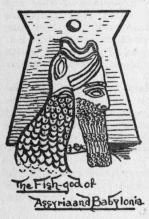
t last the full punishment for their many sins fell upon God’s chosen
people.
The words of warning written in the fifth book of Moses had told them
plainly that if they turned aside and worshipped the wicked idol-gods
of Canaan, the Lord would take their country from them and drive them
out into strange lands.
Yet again and again they had yielded to temptation. And now the day of
reckoning had come.
Nebuchadnezzar, the great king of Babylon, sent his armies into the
Holy Land. No nation at this time could resist Nebuchadnezzar; even
the fierce Assyrians had to bow before him, for he was one of the most
powerful kings the world has ever seen.
Yet even Nebuchadnezzar was but an instrument in the hands of God, as
Daniel recognized when he said: ‘Thou, O king, art a king of kings:
for the God of Heaven hath given thee a kingdom, power, and strength,
and glory.‘ (Daniel ii. 37.)
This thought had been Daniel’s comfort and stay, though he had been
carried into the great heathen land far from Jerusalem, his beloved and
holy city. But to those Jews who had no trust in God to uphold them,
the sorrow was almost greater than they could bear.
For Nebuchadnezzar broke down the wall of Jerusalem, and led many
thousands of her people away to be his slaves in Babylon.
‘We have taken their treasure of gold and silver; we have laid their
city wall in ruins; their Temple is bare and deserted; their gardens of
lilies and spices are choked with weeds; their fields are unsown; their
vineyards untended; the best men and women of the land are serving us
in Babylon. Now, at last, there is an end of this proud Jewish nation,
for all that they most valued is in our hands.’
So said the heathen Babylonians, mocking the poor captives. How little
they dreamt that the Jews’ most precious possession was with them still!
More valued than jewels or gold, sweeter than the milk and honey of
their own land, was the Book of the Law—the Book which told them all
they knew of God.
Indeed, not until the people were forced to live in a heathen city did
they really learn to understand how great a treasure their nation
possessed in the written words of God.
But in Babylon, with its huge heathen temples blazing with jewels and
gold, its scores of cunning idol-priests, who deceived the people by
pretending to tell fortunes and make charms, and its countless images,
here, at last, God’s chosen people began to see the greatness of the
gift with which the Lord had blessed them, when He gave them the words
which have now become the first books of our Bible.
Nebuchadnezzar might break down the wall of their city, he could not
break down the spiritual wall which God Himself had built round His
people. Scattered through many lands, forced to serve heathen masters
as they were, the Book of God’s Law was a living gift which bound the
Jewish people together.
As we have seen, the Psalms were written by different writers, and one
of the later Psalms, the 137th, gives us a vivid picture of those sad
days: ‘By the rivers of Babylon, there we sat down, yea, we wept, when
we remembered Zion.‘ (Verse 1.)
Babylon was famous for its great rivers; and the poor captives watched
the flowing water, and the great wind-swept beds of reeds and giant
rushes. ‘We hanged our harps upon the willows in the midst thereof.‘
(Verse 2.)
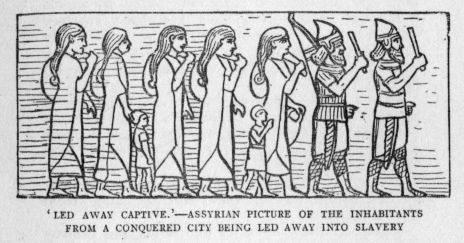
‘LED AWAY CAPTIVE.’—ASSYRIAN PICTURE OF THE INHABITANTS FROM A CONQUERED CITY BEING LED AWAY INTO SLAVERY
But their Babylonian masters had heard of the sweet psalms of the
Lord’s people. ‘Sing to us,’ they said; ‘sing us a merry song. Sing
us one of the songs of Zion.‘ (Verse 3.)
‘Sing to these cruel heathen who have wasted our country, and carried
us away into slavery! Sing one of the holy songs of Israel, the songs
which King David wrote, that they may laugh and mock at us! How shall
we sing the Lord’s song in a strange land?‘ (Verse 4.)
No, they could not sing; their hearts were breaking with grief. Never,
never could they forget the Holy City. Ruined, desolate as it lay,
Jerusalem was still to them the place most loved in all the world.
And yet, even in far-off heathen Babylon the Lord called men to add to
His Book.
The Book of Daniel has troubled many people greatly. It was not
history at all, some critics said, but a mere collection of myths and
legends. But year by year, as fresh discoveries are made, we see ever
more clearly that it would have been better to trust the old Bible
words after all.
‘There never was a ruler over Babylon named Belshazzar’ so these people
said; ‘the last Babylonian king was Nabonides.’ A few years ago,
however, Belshazzar’s name was found on an old cuneiform tablet.
Nabonides had been crowned king, but he seldom took any part in the
affairs of the empire. All that he left to his eldest son, Belshazzar,
who seems to have acted as king in his father’s stead.
Almost daily further discoveries are being made, all proving the
accuracy of Daniel’s writings. What is probably the floor of the very
dining-hall in which the hand-writing appeared has recently been
uncovered.
Cyrus,[1] of whom Ezra speaks in the first chapter of his book, was a
very different king from Nebuchadnezzar.
Nebuchadnezzar loved to pull down and destroy nations; but the great
wish of Cyrus was to build up and restore. The cuneiform writings of
the old Babylonian and Assyrian kings consist mostly of long lists of
the nations they led away into slavery and the towns they burnt with
fire; but the inscriptions made by Cyrus, the Persian king, speak of
the people he sent back to their homes. ‘All their people I collected,
and restored their habitations.'[2] And among these people, as the
Bible tells us, were the Jews of Jerusalem.
Many and great were the difficulties before them; but led, during the
reign of Artaxerxes, by Ezra and Nehemiah, they faced their troubles
bravely, until at last the wall of Jerusalem was rebuilt, and the city
restored to something of its old beauty.
What a time of joy and triumph! Hardly could the Jews believe that
they were in their own dear city once again. Psalm cxxvi. describes
this wonderful day.
‘When the Lord turned again the captivity of Zion, we were like them
that dream. Then was our mouth filled with laughter, and our tongue
with singing: then said they among the heathen, The Lord hath done
great things for them.‘ (Verses 1, 2.)
‘We have sinned against the Lord, we have been untrue to our promises;
but never again will we neglect His Book, nor forget His Law.’
‘And all the people gathered themselves together as one man…; and
they spake unto Ezra the scribe to bring the Book of the Law of Moses,
which the Lord had commanded to Israel.‘ (Nehemiah viii. 1.)
A solemn day that was, as we read in the Book of Nehemiah, a day of
real returning to the Lord. Picture them standing there, those men and
women and little children of Jerusalem; their faces would be worn with
toil and hardship.
On a raised platform of wood stood Ezra ready with the rolls of the
Books of the Law, and beside him were the interpreters.
For the people had been so long in a strange land that scarcely any of
them could speak Hebrew; that is, the old Hebrew language in which King
David wrote. If the Law of God was to be impressed afresh on the
nation’s heart that day, the scribes, the writers and the teachers must
translate it into the language of their heathen conquerors.
‘So they read in the Book of the Law of God distinctly, and gave the
sense, and caused them to understand the reading.‘ (Nehemiah viii. 8.)
Since those days of Ezra, the Bible has been translated into nearly
every known language. It is most interesting, therefore, to read in
the Bible itself about what was most likely the very first translation
of all—and this not a written translation, remember.
Now when the people heard the words of God’s Book they were very sad;
for now at last they understood how deeply they had sinned against Him.
They had been proud of their Bible, and had rightly felt it to be a
great treasure; but now they saw that the words of the Bible must be
shown forth in the lives of those who believe. To honour God’s Book is
not enough; we must obey it.
The Jewish people did not again learn to speak the old language of
their nation. Yet all the copies of the Books of the Law, and the
Books of the Prophets, the Psalms, and those writings which tell of the
history of the Lord’s people—that is, the whole of the Old
Testament—were still written in the ancient tongue.
So it came to pass, after a while, that the Bible could only be read by
the learned people; for the words in which the Law of God was given had
become a ‘dead language’—that is, a language that had ceased to be
used in daily life at all.
Before the death of Ezra and Nehemiah, or else very soon after, the
scribes of Jerusalem—that is, the writers and teachers—began to
devote themselves almost entirely to the studying and copying of the
Bible.
A young lad of those days who became a pupil in the School of the
Scribes at Jerusalem would have to begin by learning the Old Testament
almost by heart. To read an old Hebrew writing correctly was almost
impossible, unless you had heard it read two or three times, and knew
pretty well what was coming. For the ancient Hebrew alphabet consisted
entirely of consonants; there were actually no vowels!
The little dots you see in the specimen of Hebrew given on this page
are called ‘vowel-points,’ and are a guide to the sound of the word;
but in the old, old days of which we are speaking, these dots had not
been invented. The reader had nothing but consonants before him, and
was obliged to guess the rest.
Just think of it! Suppose we followed this rule in English, and you
came to the word, ‘TP,’ you would be puzzled indeed to know whether
tap, tip, or top was meant!
But the Jewish scribes had wonderful memories. A teacher would read a
long passage from the Psalms to his pupil, and very soon the lad would
be able to repeat the whole correctly, the consonant words just
refreshing his memory.
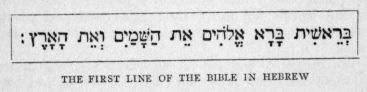
THE FIRST LINE OF THE BIBLE IN HEBREW
This would not always be as difficult as you might suppose. For
instance, you can read this easily enough:
‘TH LRD S M SHPHRD SHLL NT WNT.’
Indeed, to this day the Hebrew of the sacred Books in the Jewish
Synagogues is all written without vowel-points.
At this time it was that the Jews became really the ‘People of the
Book,’ and that a special society was formed to guard and copy the
Bible.
How wonderfully this work was done! Never have the words of any other
book been so lovingly cared for.
We have called the Bible the oldest Book in the world; we have seen
that it tells about nations and people who were almost forgotten before
the days of Abraham. It seems strange, therefore, that the most
ancient copy of the Old Testament Scriptures, written in Hebrew and in
the possession of the Jews to-day, carries us back only to the time of
our Saxon kings.[3]
This is because the Jews’ custom is reverently to destroy every copy of
the Books of the Old Testament—that is, of their Bible—as soon as it
becomes worn with use, or blurred with the kisses of its readers.
‘This is a living Book,’ they say; ‘it should look new. God’s Word can
never grow old.’
So, year by year, they make new copies directly the old are worn out,
and this they have done for long ages. And so careful have they been
in making the copies, that although all was written by hand, there has
practically been no alteration in the words for more than two thousand
years. God had indeed well chosen the guardians of His Book.
Let us try to picture to ourselves a young scribe of those old, old
days, with his dark hair and big, serious eyes, and dressed in his
white robe.
He has been very patient and industrious for many months past, working
early and late; now, at last, he is to be allowed to copy one of the
sacred books.
‘My son,’ his old teacher has said, ‘take heed how thou doest thy work;
drop not nor add one letter, lest thou becomest the destruction of the
world.’
‘Oh, may the Lord keep my attention fixed, may He hold my hand that it
shake not!’
So, with a prayer on his lips, the young scribe begins his work.
And it is through such patient, careful work as his that the older part
of our Bible has come down to us from the half-forgotten ages of the
past.
[1] Cyrus became King of Persia 546 B.C., conquered Babylon 538, died
528 B.C.
[2] Cuneiform writing made by order of Cyrus.
[3] The Codex Babylonicus, the earliest known Jewish manuscript, dates
from the year A.D. 916.
CHAPTER VI
THE ATTACK ON THE SCRIPTURES
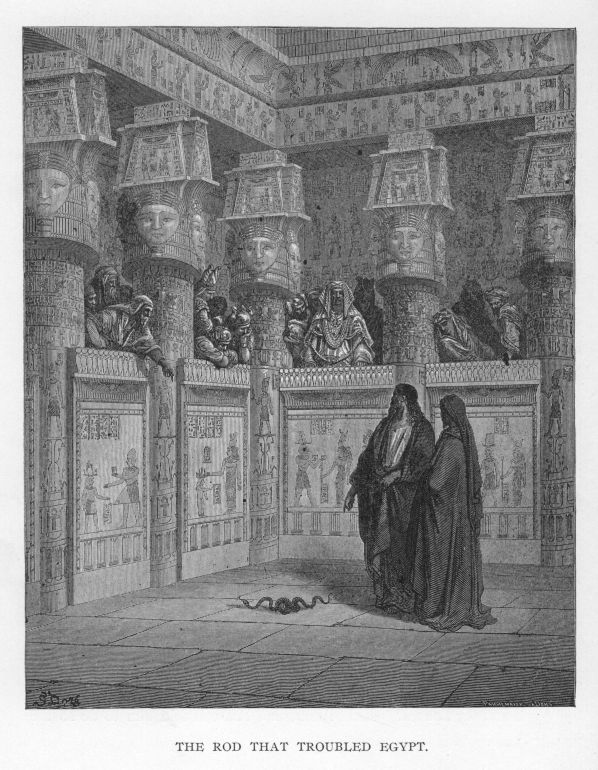
ut troubled times came again to Jerusalem. The great empires of
Babylon and Assyria had passed away for ever, exactly as the prophets
of Israel had foretold; but new powers had arisen in the world, and the
great nations fought together so constantly that all the smaller
countries, and with them the Kingdom of Judah, changed hands very often.
At last Alexander the Great managed to make himself master of all the
countries of the then-known world. Alexander was an even greater
conqueror than Nebuchadnezzar had been. He did not treat the Jews
unkindly; he neither interfered with their religion nor took treasure
from their temple.
Yet while Alexander did God’s people no outward injury, his influence
and example led them astray.
For Alexander was a Greek, and the Greeks, although at this time the
cleverest people in the whole world, were a heathen nation, and as such
did many foolish and wicked things. Alexander himself offered
sacrifice to Venus, Jupiter, and Bacchus (the pretended god of wine and
strong drink[1]), and to many other gods of man’s invention.
Never again would God’s chosen people willingly worship false gods;
their troubles had cured them once for all of that sin.
But although they knew the Greek religion to be untrue, they began
greatly to admire the Greeks themselves, and to take their opinion
about many things.
‘Who can build like these Greeks?’ they will have said. ‘Who can carve
such beautiful statues, or paint such beautiful pictures? Every one
knows that their poetry is the finest in the world, and that their
books are the wisest and pleasantest to read; and then, how well they
train their young people! The lads of Greece are the strongest
wrestlers and the swiftest runners in the world!’
All this was quite true; but the Jews forgot that mere cleverness does
not make a man or woman good, and that the fear of God is the beginning
of all true wisdom. Many people forget this even to-day.
So the Jews began to give their children Greek names, and to send them
to Greek schools, and, what was worse, they put Greek books into their
hands instead of the Bible.
Slowly but surely this unholy ‘leaven’ entered the people’s life, and
influenced their thoughts. But, in spite of all, many Jewish men and
women remained faithful to God; they kept His laws, and read in His
Book daily, looking always for the coming Saviour, the Messiah, who
would rule and redeem His people.
As the years passed the fashion for Greek ideas and ways grew stronger
in Jerusalem, until at last even the High Priest himself[2] began to
encourage the people to neglect the services and sacrifices of the
Temple, that they might go to heathen sports and games.
The Greeks were very fond of foot-races and wrestling-matches, and they
held large athletic meetings two or three times a year; but no one who
believed in God should have gone near those meetings, for the Grecian
games were always held in honour of some heathen god or goddess.
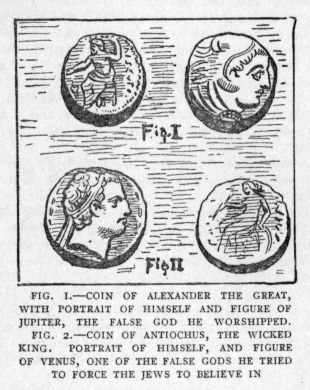
FIG. 1.—COIN OF ALEXANDER THE GREAT, WITH PORTRAIT OF HIMSELF AND FIGURE OF JUPITER, THE FALSE GOD HE WORSHIPPED
FIG. 2.—COIN OF ANTIOCHUS, THE WICKED KING. PORTRAIT OF HIMSELF, AND
FIGURE OF VENUS, ONE OF THE FALSE GODS HE TRIED TO FORCE THE JEWS TO
BELIEVE IN
When Alexander died he left his vast empire to be divided among his
generals, just as Napoleon did centuries later with his conquests. The
descendant of one of these generals was named Antiochus, and he began
to reign over Syria, which included the country of Judah, a hundred and
seventy years before the birth of Christ. He was known as Antiochus
IV, and was a selfish and cruel ruler.
Although indifferent to his own heathen religion, he set himself to
destroy all other forms of faith. ‘I am king; all my subjects shall
think as I do,’ he said. He was told that the Jews believed in only
one God, but he cried with a scornful laugh, ‘Yes, but I will soon
alter that!’
Before this there had been trouble between Antiochus and the people of
Jerusalem, and he thought to himself, ‘I must break down their old
ideas and force them to disobey the laws of Moses, as they call them;
above all, I must utterly destroy their Book. The Book of their Law
once gone, they will be easy enough to manage.’
So he sent one of his generals to Jerusalem, and bade him take an army
of soldiers and ‘speak peaceable words unto them; but all this was
deceit.'[3]
The orders of Antiochus were obeyed; the Jews suspected nothing, and
the soldiers kept quiet until the Sabbath day.
But while the Jews were at prayer, and unable to defend themselves, the
treacherous Greeks ‘fell suddenly upon the city, and smote it very
sore, and destroyed much people of Israel.’ Then these wicked men
built a strong castle on the hill of Zion, so overlooking the entrance
to the Temple that no one could come in or go out without the knowledge
and consent of the governor of the castle.
But this was only the beginning of sorrows. Soon the dreadful orders
of the heathen king were cried through the streets of Jerusalem:
‘It is the will of Antiochus the king that all the people throughout
his whole empire shall worship the same gods as himself, and shall
declare that his religion alone is true. Death to all those who
disobey.’
The Jews looked at one another in utter dismay, for they knew well that
Antiochus had power to keep his word.
‘No more burnt offerings may be made to the God of the Jews in the
Temple. I forbid the keeping of the Sabbath. The Jews’ law declares
the flesh of swine to be unclean. I command that on the altar of the
Jewish God, in His Temple at Jerusalem, a sow be offered in honour of
my god Jupiter. The Priests themselves shall be forced to eat of it.
‘As for the Books of their Law, destroy them utterly; let not a word
remain in the whole land. Publish this order against the Book; and if,
after my will has been declared, any man is found to have a copy in his
possession, let him be put to death.’
Horrible as it seems, all these wicked commands were carried out. A
sow was slaughtered on the altar, and an image of Jupiter set up in
God’s Holy Temple. More cruel than all, the Book of the Law was torn
and trodden underfoot.
Throughout Jerusalem and all the cities of Palestine bands of soldiers
went everywhere searching for copies of the Scriptures. Torn to
fragments, burnt with fire, often, alas! drenched with the life-blood
of those who loved them, now, indeed, the Books of the Bible were in
terrible danger, for the most powerful king of the fierce heathen world
was fighting directly against them!
‘O God, the heathen are come into Thine inheritance; Thy holy Temple
have they defiled; they have laid Jerusalem on heaps…. The blood of
Thy servants have they shed like water round about Jerusalem; and there
was none to bury them.‘ (Psalm lxxix.)
So the cry went up from those faithful hearts who still dared to serve
the true God.
The altar—the Temple itself—was now defiled, made ‘unclean’; the Book
of the Law had been torn to fragments; but His people could still cry
to the Lord, and He heard.
They did not obey the wicked heathen king; and the stories of their
courage thrill our hearts as we read them, for they show us what those
saints of old suffered rather than deny their God.
‘They were stoned, they were sawn asunder, were tempted, were slain
with the sword: they wandered about in sheepskins and goatskins; being
destitute, afflicted, tormented; (of whom the world was not worthy).‘
(Hebrews xi. 37, 38.)
It was of these times especially that the writer of Hebrews was
thinking when he penned those words.
Seven young men, the sons of one woman, were with their mother brought
before the king’s officer—or, as some say, before the king
himself—for refusing to break the laws of God.
They were cruelly beaten, but one of them cried:
‘What wouldst thou ask of us? We are ready to die, rather than to
transgress the laws of our fathers!’
The torturers thereupon seized the brave fellow, and so cruelly
tormented him that he died, his mother and brothers being forced to
look on.
But though their faces grew pale as death, and they quivered with
anguish to see their loved one suffer, they gazed steadfastly at each
other.
‘The Lord looketh upon us, the Lord God hath comfort in us,’ they said.
Then the second son was taken, and before he died he cried with a loud
voice, looking his heathen judge full in the face:
‘Thou, like a fury, takest us out of this present life, but the King of
the world shall raise us up, who have died for His laws, unto life
everlasting!’
But when it came to the turn of the youngest son even the heathen judge
was anxious to spare him, and he promised the lad honour and great
riches if he would but turn from his faith.
But the youth stepped out before them all, his boyish face as brave as
a man’s and his boyish voice as steady.
‘Whom wait ye for?’ he asked. ‘I will obey the Commandments of the Law
that was given unto our fathers by Moses; but thou shalt not escape the
hands of God.
‘We suffer for our sins, but our pain is short. See, I offer up my
body and life for the Laws of my fathers, beseeching God to be merciful
to my nation, and that thou at last mayest confess that He alone is
God!’
Last of all, after her sons, the mother died as well.[4]
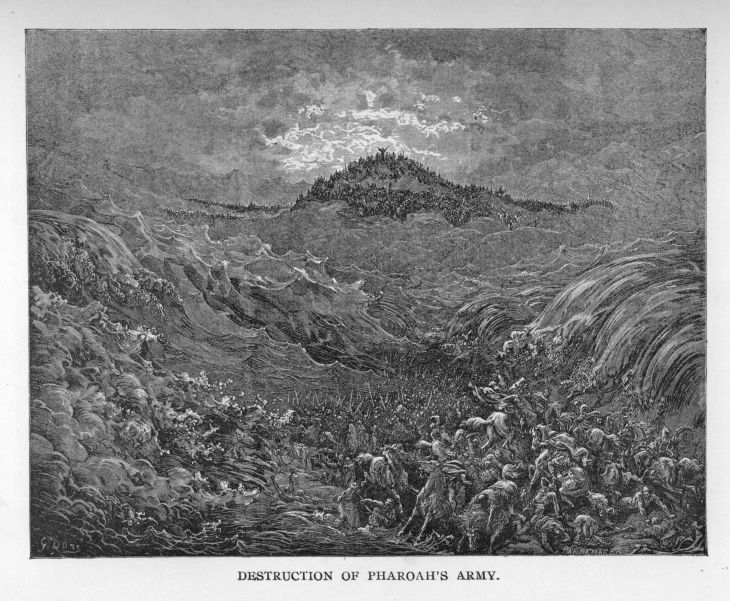
THE JEWS OF ANTIOCHUS’ TIMES COVERED THEIR HOUSES AND TOMBS WITH HEATHEN GREEK ORNAMENTS THAT THEY MIGHT BE ‘IN THE FASHION.’ HERE IS THE CORNICE OF ONE OF THEM, DECORATED IN EXACTLY THE SAME WAY AS THE GREEK IDOL-TEMPLES
But the saints of God did not die in vain; their victories over pain
and death fired the hearts that had grown so cold, and awakened the
careless into active life. Those who had forsaken the religion of
their fathers returned by hundreds to God, confessing their sins, and
pleading for pardon.
So the very fierceness of the trial proved a blessing, and the days of
torture were followed by a revival of faith in God, and devotion to His
service.
Now there was an old priest named Mattathias who, with his four sons,
had never listened to the cunning temptations of the heathen Greeks.
All his life he had served God with his whole heart, and had brought up
his sons to follow in his steps. When Mattathias and his sons heard
what was being done at Jerusalem, they clothed themselves in sackcloth
and wept, praying, and fasting continually, beseeching God to forgive
His people, and to put away their sins.
In a little while the king’s officers came to the heathen altar at
Modin, the town where the old priest lived.
‘Sacrifice to Jupiter, our master’s god!’ they said. ‘Sacrifice, as
all Jews shall be forced to do, or die!’
But the old man looked the Greek straight in the face. ‘Though all the
nations in the world obey the king, yet will I and my sons walk in the
covenant of our fathers. God forbid that we should forsake His Law.’
As he spoke a backsliding Jew stepped up to the altar to sacrifice.
The old priest’s eyes flashed fire, and in an instant he had struck him
down, and the Greek officer with him.
Quivering with indignation Mattathias then turned to the startled
people: ‘Whosoever loves God, let him follow me!’
And he turned and fled swiftly through the streets of the city.
Many followed him at once. Others joined him later in the strong camp
he formed in the mountains, until at last he was at the head of an army.
Wonderful it is to read how, little by little, this army of God’s
people drove the heathen from the cities of Judah; how they overturned
the heathen altars, and cast down the images of the false gods; and
how, at last, they came to Jerusalem, cleansed the Temple, and purified
the golden altar from the stains of heathen sacrifices.
Then, tenderly and reverently, they gathered together all that was left
of the copies of their Scriptures, weeping as they saw the poor
fragments, blackened with fire, stained with blood, and scrawled all
over with the horrible figures of heathen gods.
As to-day we read in the clean white pages of our Bible, let us
remember this scene and of the time when those torn and blood-stained
fragments were all that remained to the world.
But, thank God, when all the pieces had been collected together, there
was plenty of material from which to make fresh copies; and no sooner
had peace been restored to the city than the scribes set to work, with
eager, loving care.
The Book had become doubly precious now! Its written words were indeed
sacred, for the blood of martyrs had fallen upon them, and men and
women, and little children, too, had chosen to die by hundreds rather
than to deny them.
[1] With all his cleverness, Alexander, while still quite young, drank
himself to death.
[2] In the days of Joshua, who bought the office of High Priest under
the reign of Antiochus, so many priests took part in the games that the
regularity of the Temple services suffered.
[3] From ‘Maccabees,’ an old Jewish history, which is sometimes bound
up with our Bible.
[4] This is taken from ‘Maccabees.’
CHAPTER VII
TWO FAMOUS VERSIONS OF THE SCRIPTURES
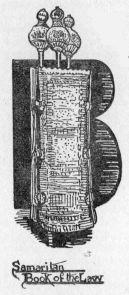
y the blue waters of the Mediterranean Sea, on the coast of Egypt,
lies Alexandria, a busy and prosperous city of to-day.
You remember the great conqueror, Alexander, and how nation after
nation had been forced to submit to him, until all the then-known world
owned him for its emperor? He built this city, and called it after his
own name.
About a hundred years before the days of Antiochus (of whom we read in
our last chapter) a company of Jews were living in Alexandria, then a
rich and beautiful city, with its stately palaces and temples of white
marble, its beautiful gardens, and groves of graceful palm-trees.
After the death of Alexander, the Greek kings of Egypt delighted to
live in the new city, and in the old Greek books we can yet read of the
splendid processions and festivals held in its streets year by year.
At this time Alexandria drew all the merchants of the world to her
markets; and her harbour was constantly filled with ships laden with
silver, amber, and copper; while caravans were arriving daily, bringing
jewels and rich silks from China, India, and the cities of the far East.
The Jews of Alexandria were not treated as foreigners, but as good
subjects and citizens, by the Greek rulers of Egypt, and therefore as
the years passed they grew rich and honoured in their beautiful home.
Their children, however, seldom if ever heard Hebrew spoken; for all
the Jews of Alexandria, for convenience’ sake, spoke Greek like their
neighbours.
But, although these Jews lived in a heathen city where they read
nothing but Greek books, and heard Greek spoken all day long, they did
not forget their God. They longed as earnestly as ever to hear about
Him, and to read in His Book; but what was to be done? Only a few of
the elder Jews could read Hebrew, and their children could not
understand one word of the language. Must the little ones, therefore,
grow up in ignorance of the Word of God?
This was impossible. Here in the heathen city of Alexandria the
Scriptures would be the only safeguard of Jewish boys and girls. ‘If
the language of our children is Greek, then the Bible must be
translated into Greek, so that they all can understand it.’ So said
these Jewish parents.
This was a wonderful proof of the Bible’s living power. The Jews had
changed their language and their country. Thousands of the cleverest
books ever written were within their reach—for Alexandria had at this
time the largest library in the world—yet all this made no difference;
without the written Word of God, they could not exist.
Some writers say that Ptolemy Philadelphus, the king of Egypt of that
time, having heard the Jews speak of their Book, and wishing to have a
copy of it to place in his great library, sent all the way to Jerusalem
for seventy learned scribes who should translate the Book into Greek.
Now, however, it is believed that the Jews of Alexandria did the work
entirely themselves, although their Greek Bible is still called the
‘Septuagint’—that is, ‘The Scriptures of the Seventy’—in memory of
the old tradition.
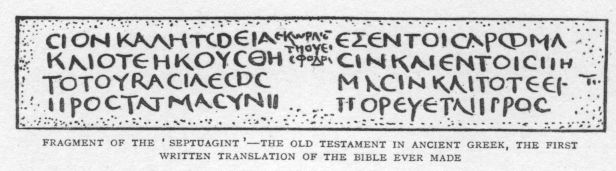
FRAGMENT OF THE ‘SEPTUAGINT’—THE OLD TESTAMENT IN ANCIENT GREEK, THE FIRST WRITTEN TRANSLATION OF THE BIBLE EVER MADE
Gradually, as the years passed, the Greek language spread to other
nations, until at last it became, as we have seen, the leading language
of the world. Even to-day, as you know, this old Greek tongue is
taught in many of our schools and colleges, and those who can read it
tell us that there is no language so beautiful; none with words so
sweet to the ear, nor in which such deep thoughts can be expressed.
Thus we see how God used the learning of the heathen Greeks to make His
Book known to the world!
For hundreds of years the Bible had been a Book for the people of
Israel alone; but now, as the time drew near when the Son of God
Himself should come to the world—that the world by Him might be
saved—the Scriptures, which had since the days of Moses spoken of His
coming, were sent out to the nations by God Himself in order to prepare
the way.
The Jews of old divided all dwellers on the earth into two classes: the
Jews—that is, themselves; the Gentiles—that is, all the other nations.
But now the wall of separation was to be broken down, and the words of
the Prophet Isaiah were to be fulfilled, ‘The Gentiles shall come to
Thy light.‘ (Isaiah Ix. 3.)
Now that God’s Holy Word had been translated into Greek, the one
language which every man of those days wished to learn, the message
could ring through all the Gentile cities: ‘A King, a Saviour, is
coming; be ready to meet Him!’
So the Scriptures went forth, north, south, east, and west, and we
think they reached to that far eastern city in which those three wise
men lived who afterwards travelled to Bethlehem, seeking the Messiah,
and saying, ‘Where is He that is born King of the Jews?‘ (Matthew ii.
2.)
The Bible had indeed taken a strong leap forward now!
For long centuries it had been like a tiny stream flowing through a dry
land, and reaching only a few people. Now it had become as a river of
truth, ever growing deeper and wider, guided by God in all its
wanderings across the earth.
The Bible was now no longer locked up in a language which was already
half-forgotten. With this Greek translation its world-wide work had
begun!
But while the Greek translation of the Hebrew Scriptures was becoming
an open door through which the people of many lands could draw nearer
to God, a second witness to the truth of God’s Book was hidden away in
Samaria.
For the Samaritans had their own copies of the Books of the Law, and
kept them closely shut up among their own people for hundreds of years.
It is impossible now to give the actual date when the Samaritans began
to use a different copy of the Scriptures from the Jews. The
Israelitish city of Samaria was captured by Sargon, king of Assyria, in
722 B.C.; but although he carried away the most important inhabitants
captive, a great number of the poorer people remained on the land, and
when Sargon filled the country with new and heathen settlers, so many
marriages took place between the two races that the Children of Israel
lost their old name and were known to the Jews of Judah as ‘Samaritans.’
Yet the Samaritans still clung to the Jews’ religion, and the
separation did not probably become complete until Nehemiah expelled all
those Jews from Jerusalem who had married heathen wives. (Nehemiah
xiii. 23-30.)
Now Josephus, the Jewish historian, tells us that among these exiles
was a man named Manasseh, a grandson of the high priest, and that,
indignant at being cast out, he fled to Samaria. Here he determined to
set up a separate worship of Jehovah, and, having obtained permission
from the king of Persia to erect a Temple, he built a Holy Place on
Mount Gerizim, which became the centre of a new form of religion.
It is thought that Manasseh had carried away a copy of the Books of the
Law from Jerusalem, and by means of certain alterations in the words he
made it appear that God had chosen Mount Gerizim in Samaria for the
site of His House, instead of Mount Moriah in Jerusalem.
Now at this time all the Jews still wrote in the ancient style, forming
their letters as we see them on the Moabite Stone; but not long
afterwards they adopted the square letters of Hebrew writing such as
are still in use to-day.
The Samaritans, however, in their hatred of everything Jewish, refused
to follow their example. The Jews had cut them off, and they would
take nothing from the Jews; they would keep to the old style of
letters; they would not allow a single word of the Books of the
Prophets or the Psalms or History Books to have a place among their
sacred writings. The Jews accepted these Books as inspired; therefore
the Samaritans rejected them.
Thus Jewish pride and Samaritan littleness raised a terrible barrier
between the two nations, which grew more hopeless every year.
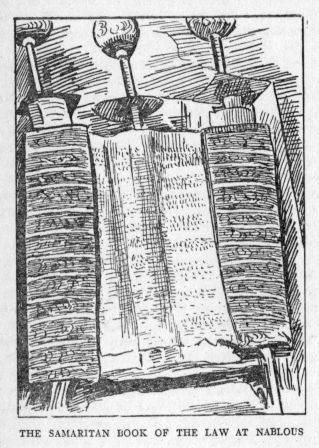
THE SAMARITAN BOOK OF THE LAW AT NABLOUS
Yet these hidden Samaritan documents, falsified as they had been, have
had a work to do for God’s Word within comparatively recent times.
For in the year 1616 A.D., just as some people were beginning to attack
the Bible, and to declare that they could find no evidence that the Old
Testament was so ancient after all, the world was suddenly startled to
hear of a great discovery—an ancient copy of the Law had been found in
Syria.
Other copies soon afterwards came to light: the world had rediscovered
the Samaritan Bible!
At Nablous, in Samaria, known in Old Testament times as Shechem, a
traveller was allowed to look at the oldest Samaritan copy of the
altered books of the Law. Its queer letter signs are traced on
parchment rolls, which are said to have been formed from the skins of
rams offered in sacrifice. They are kept in a silver cylinder, covered
with crimson satin, heavily embroidered with gold.
But out of this discovery a new difficulty arose. Some of the critics
decided that this was the original copy written by Moses, and therefore
more correct than the Jewish Scriptures. They would have done better
to wait, and to have trusted the Bible a little more.
True, the discovery was of great importance, for these documents proved
beyond all doubt that the Book of the Law dated back to a time when the
ancient form of letters were still in use, and so they bore a strong
witness to the great age of the first five Books of our Bible.
But learned scholars were soon able to prove that the oldest Samaritan
copy was probably not older than the tenth or eleventh century of our
era, and that the form of the letters was so ancient merely because the
Samaritans refused to imitate the improved Jewish writing. A hundred
years ago, for instance, books with long ‘s’s’ were printed in England;
but the old form of letter was tiresome to read, and is now entirely
out of date.
Now the Samaritans had not only refused to accept the new and improved
form of letters—they had rejected as well all the fresh light and
inspiration which God was continually giving to His people through the
Holy prophets. According to the Samaritans, Moses was the only true
prophet. Thus they cut themselves adrift from further light, and
little by little the nations had dwindled away.
Yet because so many of the Samaritans in the time of Christ were
faithful to the measure of light they had, and kept alive in their
hearts the hope of a coming Messiah, God made for them a wonderful way
of escape.
Every Bible reader knows and loves that beautiful scene by the well of
Sychar, in Samaria, where the Saviour began by asking a woman for water
to drink, and ended by explaining to her some of the deepest truths of
God’s Kingdom.
We understand now why the woman was so surprised that a Jew should
condescend to speak to her, and why the Jews would have ‘no dealings
with the Samaritans.’ As we have seen, a great barrier divided her
from all ordinary Jewish teachers—she had been taught to believe in an
altered Bible.
Not merely a different translation, remember, for the Bible should be
the same in every language, but a Book of the Law in which some of the
words had been changed and the original meaning destroyed.
So the woman said to our Lord, ‘Our fathers worshipped in this
mountain; and ye say, that in Jerusalem is the place where men ought to
worship.‘ (John iv. 20.)
The Saviour had not said so, but she felt sure that He, as a Jew, would
certainly contradict the old traditions of his countrymen.
But the Lord Jesus Christ had come to show the world that it was no
longer a question of this mountain or that. Such matters had been but
a shadow of the good things to come. ‘God is a Spirit: and they that
worship Him must worship Him in spirit and in truth.‘ (John iv. 24.)
With these words Jesus, the Messiah, for whom both Jews and Samaritans
were waiting, threw down the barrier of ages, and united the two
nations in a spiritual worship.
CHAPTER VIII
THE BIBLE IN THE DAYS OF JESUS CHRIST
lowly but surely, as time went on, God was adding to His Book, until
about four hundred years before the birth of Jesus Christ the Old
Testament Scriptures, in their present shape, were completed.
Many questions have been asked as to how the canon of the Old Testament
was formed—that is, how and when did the Jews first begin to
understand that the Books of the Old Testament were inspired by God.
About the first five Books—the Books of the Law—there had never been
any question. From the very earliest times those Books, so wonderfully
given to the people, had been the strength and stay of the Children of
Israel.
But many books had been written in the days of the old Jewish kings,
and also after the return of the people from Babylon: some of these
were very beautiful and helpful. How were the sacred Scriptures first
divided from the other Jewish writings?
We do not know. Some have thought that Ezra the scribe, with the
assistance of a council of elders, fixed the canon of Hebrew Scripture;
others have supposed Nehemiah to have undertaken the work; but most
likely it was a gradual process, directed by God Himself, who inspired
His servants to carry out His will.
The Christian Bible is composed of two parts, the Old and the New
Testament; but the Jews divided their Scriptures—our Old
Testament—into three parts, and they certainly looked upon some books
as far more sacred than others. The ‘Torah’—that is, the
Law—included, as we have seen, the first five books of the Bible.
From the very earliest days the Torah was reverenced as containing the
commandments and promises of God.
The second division consisted of the ‘Prophets,’ these being subdivided
into the ‘Former Prophets’ (four volumes)—Joshua, Judges, Samuel,
Kings—and the ‘Latter Prophets’ (three volumes)—Isaiah, Jeremiah,
Ezekiel—and the Twelve Minor Prophets (which were included in one
book).
Next in order of sanctity came the third division, the ‘Writings,’ and
these again were subdivided into three groups: the poetical Books of
the Psalms, Proverbs, and Job; the ‘Rolls’ or ‘Readings’ (seven
volumes)—Solomon’s Song, Ruth, Lamentations, Ecclesiastes, Esther,
Daniel, and one volume containing Ezra and Nehemiah; and, lastly, in a
separate book, Chronicles. Thus the whole Scriptures were contained in
twenty-four books.
Indeed, not until the Greek translation was made were the books grouped
in the order in which we have them now, and at the same time their
number was increased to thirty-nine by taking the writings of each of
the prophets separately, and treating Ezra and Nehemiah as different
books.
And now God, who has spoken in times past by many different ways and
voices, spoke at last to the nations by His Son, ‘by whom also He made
the worlds.’ (Hebrews i. 2.)
Let us think for a little while of what was being done with the
Scriptures in the days when the Lord Jesus learnt to read their words
at His mother’s knee; words which from first to last told of Himself.
We have seen that no people could possibly honour the actual letters of
the Scripture more highly than did the Jews. The care they took to
keep the words exactly as they had been handed down to them was
infinite; and God, who knows all things, knew that a time would come
when the pure Hebrew words of the old Bible would be eagerly sought
for, and treasured by all who truly honour His Book.
Therefore, although the eyes of the learned Jewish scribes were so
blinded, that they did not recognize their King and Saviour when He
came, yet God blessed all that was true in their work, and it is from
the Hebrew copies which they made of the Books of the Old Testament,
and not from the ‘Septuagint,’ or Greek translation, that the Old
Testament of our Bible has come to us to-day.
Yet, sad to say, while so careful to preserve the words of the
Scriptures, the Scribes and Pharisees forgot its spirit, the very
purpose for which the Bible had been given them.
A man might know by memory every letter of the Bible, but unless the
Spirit of God were in his heart, helping him to act out in his life the
words he repeats with his lips, all his knowledge of the Bible would
only lie as a dead-weight upon his soul. ‘The letter killeth, but the
spirit giveth life.‘ (2 Corinthians iii. 6.) So wrote the Apostle
Paul, who had, as we know, been educated by the Scribes and Pharisees,
and when he wrote those words he was recalling his own experience.
Thus, as year by year the learned Jews thought more of the letters of
their Bible, they saw less of its spirit; worse still, they began to
add to the teaching of the Books of the Law.
Not that they ventured to put other words between those of the Bible,
or to alter it as the Samaritans had done; but they invented long
explanations of almost every verse, and declared that these
explanations must be followed as absolutely as the words of the Bible
itself.
For instance, a learned Jewish teacher wrote an explanation of Moses’
command about obeying the Levites. (Deuteronomy xvii. 11.) Moses had
said that the people were to do what the Levites told them respecting
the Law of God, neither turning ‘to the right hand, nor to the left.‘
The Jewish teachers declared what Moses really meant was that if a
teacher of the Law told you that your left hand was your right you must
believe him!
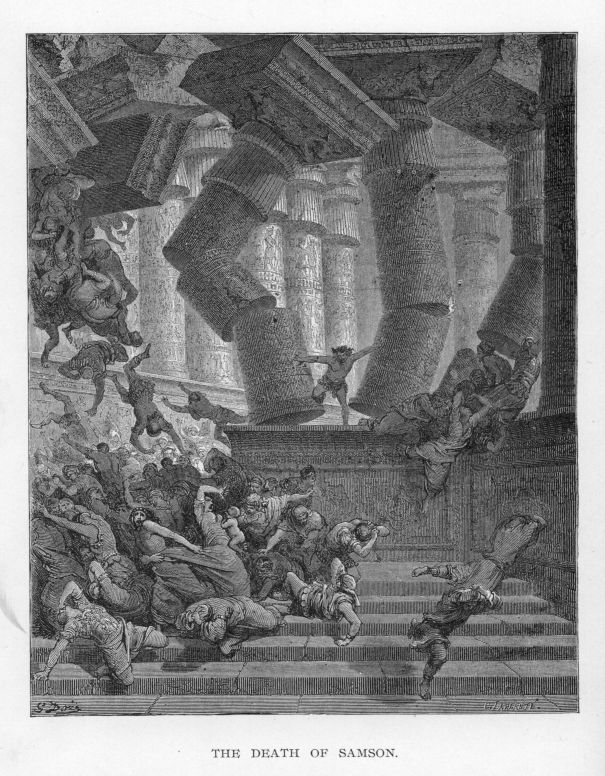
PLAN OF A SYNAGOGUE
1. MODEL OF THE ARK WHICH WAS CARRIED BEFORE THE CHILDREN OF ISRAEL.
2. STAND FOR THE READER. 3. WOMEN’S GALLERY. 4. ENTRANCE
In this way, while professing to explain God’s Word, the scribes and
teachers were confusing the simple people who wanted to obey this Holy
Law.
The Saviour saw this, and He fearlessly rebuked the teachers of the
Law, grieved beyond words that those to whom God had entrusted His Book
should make ‘the Word of God of none effect through your tradition.‘
(Mark vii. 13.)
His own way of using the Scriptures was very different. From His
mother He had first learned to repeat texts from the Old Testament, and
with her He had gone to the Synagogue, Sabbath by Sabbath, to hear the
Books of the Law and the Prophets read.
As He grew older He would have been sent to school and taught to read
and recite the Scriptures, and long before He began Himself to teach
the people He had so absorbed the spirit of the Old Testament that His
very thoughts seem to have been given in Scripture words.
Perhaps you have wondered why the names of some of the prophets and
heroes of the Old Testament are spelt so differently when mentioned in
the New—’Elias’ instead of ‘Elijah,’ ‘Noe’ instead of ‘Noah,’ and so
on. This is because the writers of the New Testament quoted from the
Greek translation of the Bible instead of from the Hebrew. Names
change a little, you know, when translated into other languages. For
instance, our name of Mary becomes ‘Marie’ in French, and ‘Maria’ in
Italian, and yet it is all the while the same name.
Some people think that this, the Septuagint, or first Greek
translation, was the special translation of the Bible which the Saviour
used. Many of the quotations which He gave from the Old Testament
appear to have been from this translation, although some seem taken
directly from the Hebrew, and others again from an Aramaic version
which has disappeared.
Christ Himself no doubt taught the people in the Aramaic tongue, which
was a mixed language, and came into use after the Jews’ return from
Babylon. Aramaic is called ‘Chaldee’ in the Book of Daniel.
But while our Saviour constantly quoted from the Old Testament, He
never used its words without definite purpose. The Sword of the Spirit
in His hands was either turned against the Evil One, or brought
directly to bear with overwhelming force on some mistaken teaching
which had blinded the people to the true meaning of the Word of God.
The direct and yet simple way in which He reached the point, and once
and for all swept away the difficulty, amazed and confounded the
learned Jews.
An instance of this is found in His wonderful answer to the Sadducees,
who disbelieved in the Resurrection. ‘As touching the Resurrection of
the dead,‘ He said, ‘have ye not read that which was spoken unto you
by God, saying, I am the God of Abraham, and the God of Isaac, and the
God of Jacob?‘ (Matthew xxii. 31, 32.) His hearers, of course, had
heard these words quoted from childhood, but not till the Saviour
explained their full significance—’God is not the God of the dead,
but of the living‘—did they realize that in the first recorded words
spoken by God to Moses lay a proof of the Resurrection and of life
after death.
Let us take a look at the first time in which Christ publicly read and
explained the Scriptures. It is the Sabbath, and the synagogue of
Nazareth is full of people, serious and attentive, for they have met
together to hear the Word of God.
Now One stands up to read. The sacred Roll is in His hand; the Roll of
the Book of the prophet Isaiah. Listen:—
‘The Spirit of the Lord is upon Me, because He hath anointed Me to
preach the Gospel to the poor; He hath sent Me to heal the
broken-hearted, to preach deliverance to the captives, and recovering
of sight to the blind, to set at liberty them that are bruised,
‘To preach the acceptable year of the Lord.‘ (Luke iv. 18, 19.)
He closes the Book and sits down.
From the dim ages of the past those words had been read; in the long,
long ages to come they will yet be read, until the World shall cease to
exist, and time itself be known no more.
But never before and never again could there be so heart-searching or
sacred a reading as this, when the Son of God read from His Father’s
Book in the simple village meeting in Galilee.
And yet His listeners did not understand the reading. Even after His
explanation of the words they fell upon deaf ears and raised only anger
and surprise. It was then that the first attempt was made to destroy
Him. (Verse 29.)
To His own Apostles, enlightened as they were, the message of the Old
Testament was sealed until after the Saviour’s Resurrection, when He
‘opened their understanding, that they might understand the
Scriptures.‘ (Luke xxiv. 45.) Then only did the wonderful truth dawn
upon them that in coming to earth, in suffering, rising from the dead,
and ascending to Heaven, their Master had not destroyed the Scriptures,
but had fulfilled them. (Matthew v. 17.)
CHAPTER IX
THE DESTRUCTION OF JERUSALEM
od had given to His people a Book foretelling the coming of the
Christ—or Messiah, as the word is written in Hebrew—so that they
might be prepared and ready for His appearance. Yet when He came they
did not receive Him. They were looking for an earthly king, and the
beautiful words spoken by the ancient prophets had no meaning to them.
When Jesus Christ was born in Bethlehem, the Jews were under the iron
rule of the Roman Empire, of which they formed a part, for although the
Jewish family of the Herods reigned over Judea, they only held their
throne under the Roman Emperor. This the Jews could not endure. They
longed to be a free and independent nation once again.
‘When our Messiah comes He will be a great warrior,’ they said. ‘He
will utterly destroy all our enemies. He will make Jerusalem the
greatest and richest city in the whole earth; all other nations will
bow down before us, acknowledging that the Jews alone are the chosen
people of God.’
Thus they were expecting a Messiah who would begin his work by killing
all the Roman soldiers in Palestine.
Had Jesus of Nazareth been willing to become their earthly king and to
lead the nation against the Romans, the Jews would probably have
followed Him to a man. (John vi. 15.) But He saw that, even from a
human standpoint, the nation could not be helped in this way, and that
the Jews would only rebel against the Romans to their destruction.
Instead of widening the breach between them and their conquerors, the
Saviour sought to heal it. He called out the faith and gratitude of
the Roman centurion, and His answer to the Jewish leaders, ‘Render to
Caesar the things that are Caesar’s (Mark xii. 17) showed them the
right attitude in which to regard the Roman rule.
When, therefore, He was brought at last before Pilate, the Roman
Government had no quarrel with Him. ‘Thine own nation … hath
delivered Thee unto me,‘ said Pilate who would have released his
prisoner, had not the Jews prevented it.
‘If thou let this Man go, thou art not Caesar’s friend,‘ they cried,
thus compelling Pilate, at the risk of being reported as a traitor to
his Emperor, to crucify Jesus of Nazareth, and to free Barabbas.
But in choosing the rebel, Barabbas (Mark xv. 7) as their hero, the
nation started on their downward road, as the story of the forty years
which followed the Saviour’s crucifixion clearly shows.
For the Jews were determined at all costs to throw off the Roman yoke,
and the history of those years is one long list of terrible risings and
massacres, while cities were ruined, villages wrapped in flames, and
men, women and children perished with hunger.
Yet the keener the suffering, the more desperate the Jews became.
Their whole souls were possessed with a wild and mad passion for
revenge.
The Saviour had warned His hearers most earnestly against following
false Christs. ‘Then if any man shall say unto you, Lo, here is
Christ, or there; believe it not.‘ (Matthew xxiv. 23.)
Yet no sooner did a daring rebel or murderer gather a band of robbers
around him, and begin to kill and plunder, than multitudes of Jews
cried, ‘The Christ, or Messiah has come; now we shall have vengeance on
our enemies!’
They were fighting against God now, and against the Book which He had
given them. All peace-loving people who could possibly do so left the
country.
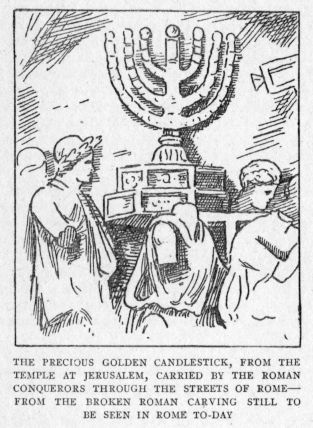
THE PRECIOUS GOLDEN CANDLESTICK, FROM THE TEMPLE AT JERUSALEM, CARRIED BY THE ROMAN CONQUERORS THROUGH THE STREETS OF ROME—FROM THE BROKEN ROMAN CARVING STILL TO BE SEEN IN ROME TO-DAY
At last, in 66 A.D., all the Jews in Jerusalem rose in a body against
their Roman governors. They surrounded the great tower of Antonia
where the Roman soldiers were quartered, and cried out to the garrison
within that their lives should be spared if they would lay down their
weapons. The Roman soldiers hesitated, but the Jews promised most
faithfully to keep their word.
The Romans believed them, and opened their gates; but no sooner were
they in the power of the Jewish mob than they were fallen upon and
murdered to the last man!
As they died the Roman soldiers, whom not even death could terrify,
lifted up their hands to Heaven, as though calling upon God to witness
that the Jews had broken their solemn oath.
The Roman Emperor could not overlook such rebellion and treachery, and
he sent a great army against Jerusalem. The Jews shut the gates of
their city, and so began the awful siege of Jerusalem.
‘And when ye shall see Jerusalem compassed with armies, then know that
the desolation thereof is nigh.‘ (Luke xxi. 20.)
Forty years before, Jesus Christ Himself had spoken these words, and
now there began for Jerusalem days filled with horror and woe, ‘such
as was not from the beginning of the creation which God created unto
this time.‘ (Mark xiii. 19.)
The story of these days has been written for us by a wise Jew named
Josephus. He was a prisoner in the Roman camp during the siege of
Jerusalem, and he watched with dismay the great battering-rams and war
engines crashing through the walls of the Holy City. His ears rang
with the cries of rage and despair which broke from the Jews within, as
one by one their defences fell, and the end drew near!
Then food failed in the city; men fought like demons in the streets for
a tiny loaf of barley-bread; so frantic were the people with hunger
that mothers even snatched the bread from their own children’s mouths!
‘Look over the walls, O people of Jerusalem; the Roman soldiers are
crucifying all the prisoners they have taken, and the line of crosses
is as long as our city is wide!’
Hard, merciless as was the Roman general, even he grew sick with horror
at last, and he sent his Jewish prisoner, Josephus, to the Jews,
promising them their lives if they would give up the city. But a
furious madness had possessed the people, and they refused to yield.
Josephus pleaded in vain. He was not a Christian, but he could see
plainly enough that God was no longer with His people.
‘Ah, my countrymen,’ he cried, ‘we did nothing without God in the past,
but now you are fighting against Him. Had God judged you worthy of
freedom, He would have punished the Romans as He did the Assyrians long
ago. God is fled out of your holy place, and stands on the side of
those against whom you fight!'[1]
It is strange and wonderful to read these words in the old history.
Even a Jew who had no faith in Jesus Christ could see plainly that the
ancient power and glory of his nation had gone.
At last the end came. The first wall fell, then the second and the
third, until the Roman soldiers, now as mad as the Jews themselves,
burst into the Holy City, hewing down the defenceless people at every
step.
And so they came to the Temple—that beautiful Temple of white marble
and gold, which still glittered like a hill of snow in the morning
sunshine, or sparkled as though wrapped in flame when the sunbeams
struck full on its golden roof.
Then redder flames than ever the sunshine made leapt above the golden
roof; pillars fell, beams crumbled to ashes, while round the altar of
sacrifice the people of Jerusalem lay heaped together, slain in such
numbers in the Holy Place that their blood flowed down the broad marble
steps in a heavy crimson stream.
And the golden candlestick and the Book of the Law were carried away in
triumph into heathen Rome.
Alas for the Holy City, over which the Saviour of the world had stood
and wept forty years before, knowing the suffering that lay before her!
‘These Jews are dangerous. We must not allow them to rebuild their
city, or to become a separate people again. As a nation they must
cease to exist.’
So the Roman conquerors of Jerusalem agreed; and from that day onward
the Jewish people have had no country of their own. They have, indeed,
been ‘led away captive into all nations‘ (Luke xxi. 24) exactly as
the Lord foretold.
There is scarcely a country in the world where Jews may not be found,
but Jerusalem lies still in the hands of strangers, and is the property
of the Turkish nation.
The Jews were now no longer a nation. They had become merely a body of
people led by their Rabbis, or teachers of the Law; but they were still
‘the people of the Book,’ for even after frequent rebellions had so
angered the Romans that they passed a law forbidding a Jew to enter the
partially re-built city of Jerusalem under pain of death, they allowed
the Jewish teachers to continue the synagogue services in other parts
of Palestine, and to teach in their colleges.
The most famous Jewish college of these days was at Tiberius, on the
shores of the ‘Sea of Galilee,’ over whose clear depths the Lord Jesus
Christ had sailed so often, and beside whose shores He had done so many
wonderful deeds of love and mercy.
A great and beautiful college it was, with broad terraced gardens,
where the students paced to and fro, their whole hearts and souls
absorbed in their work. The Temple copy of the Book of the Law was now
in the palace of the heathen Emperor in Rome, but many less precious
copies were left to them. So all day long they studied and copied the
old Hebrew Bible.
As we have seen, the Jewish scribes had not been content with taking
the Word of God just as it stood; they had begun, even in our Lord’s
day, to invent explanations of many parts of the old Books which quite
altered their true meaning.
After the fall of Jerusalem the learned Jews, shut away in their
colleges and striving to forget their sorrows, began to write down the
Scripture explanations, and to add to them so greatly that it became
more difficult to recall the comments on the Bible than it was to
remember the Bible itself.
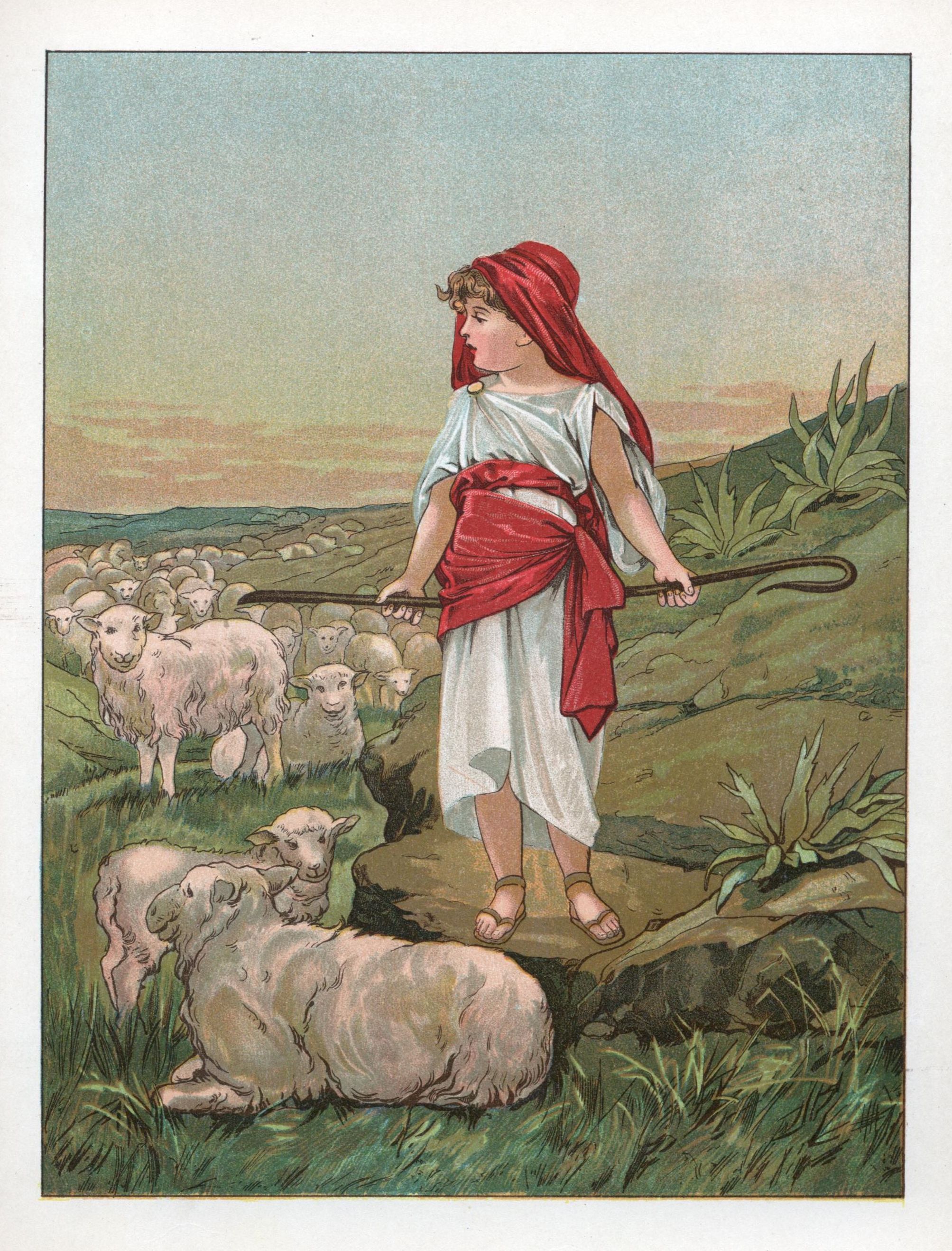
MEDAL MADE BY TITUS, THE CONQUEROR OF JERUSALEM. THE WORDS, IVDAEA CAPTA, MEAN ‘CAPTIVE JUDEA.’ THE WOMAN WEEPING UNDER A PALM-TREE STANDS FOR THE CITY OF JERUSALEM
These explanations, all collected together, are called ‘The Talmud.’
Now the learned Jews grew so fond of their Talmud, that they declared a
man to be a blockhead if he knew only the Scriptures and not the Talmud
explanation.
‘The law of Moses is like salt, but the Talmud is balmy spice,’ they
would say.
Yet although they heeded so little the true meaning of God’s Book, they
guarded its words more and more carefully; and the rules for copying
any portion of the holy Books were strict indeed.
‘My son,’ an old teacher would say to his pupil, ‘before you copy a
single word you must wash your body all over, and clothe yourself in
full Jewish dress, preparing your mind with solemn thoughts. The
parchment you write upon must be made from the skins of “clean” animals
only—that is clean according to the Law of Moses.
‘The ink you write with must be of a pure black, made only from a
mixture of soot, charcoal, and honey. Though you know the whole Book
of the Law by heart, you must not write a single word from memory, but
raise your eyes to your copy, and pronounce the word aloud before
trusting it to your pen. Before writing any of the names of God you
must wash your pen: before writing His most sacred Name you must wash
your whole body. If, after your copy has itself been examined, three
corrections have to be made, that copy must be destroyed.’
Not satisfied with all these directions, the master taught his scholar
to count the letters of every Book.
One of the letters in Leviticus xi. is the middle letter of all the
five Books of Moses, a word in chapter x. is the middle of all the
words, and a verse in chapter viii. is the very centre of all the
verses. The letter ‘A’—that is the Hebrew letter which stands for
‘A’—occurs 42,377 times; the letter ‘B’ 35,218, and so on.
Not only this, but every scribe was required to know from memory
exactly how many letters of each kind there should be in his sheet
before he began to write. Every sheet of parchment must contain an
equal number of lines, and the breadth of each column had to be thirty
letters wide.
There are eleven verses in the Book of the Law beginning and ending
with ‘N,’ there are forty verses in which ‘Lo’ is read three times—and
so on, and so on.
How tedious and meaningless such information appears! Of what value
were all these details?
To spend all his days in learning such things as these could have no
influence on a man’s character, nor make him a power for good in the
world. Not for this purpose had God revealed His will to man.
Some years ago in the coffin of an Egyptian mummy, a little jar of
wheat was found. For thousands of years it had lain there, shut up in
the dark, while out in the fields the corn which had been sown had
grown up and been reaped every year, and men and women had been fed.
But this jar of corn was useless, because it had been prevented from
doing the work in the world for which it was created.
Just so was it with the Hebrew copies of God’s Word. Locked up in a
dead language, kept close, away from the world, they were like the jar
of wheat which could not grow.
But meanwhile God’s Book was growing in the wide fields beyond. While
the Jews were keeping safe the letters of the Old Testament, the New
Testament was beginning to do its mighty work in the great heathen
cities of the world.
[1] Josephus: ‘Wars,’ Books v. and vi.
CHAPTER X
THE BEGINNING OF THE NEW TESTAMENT
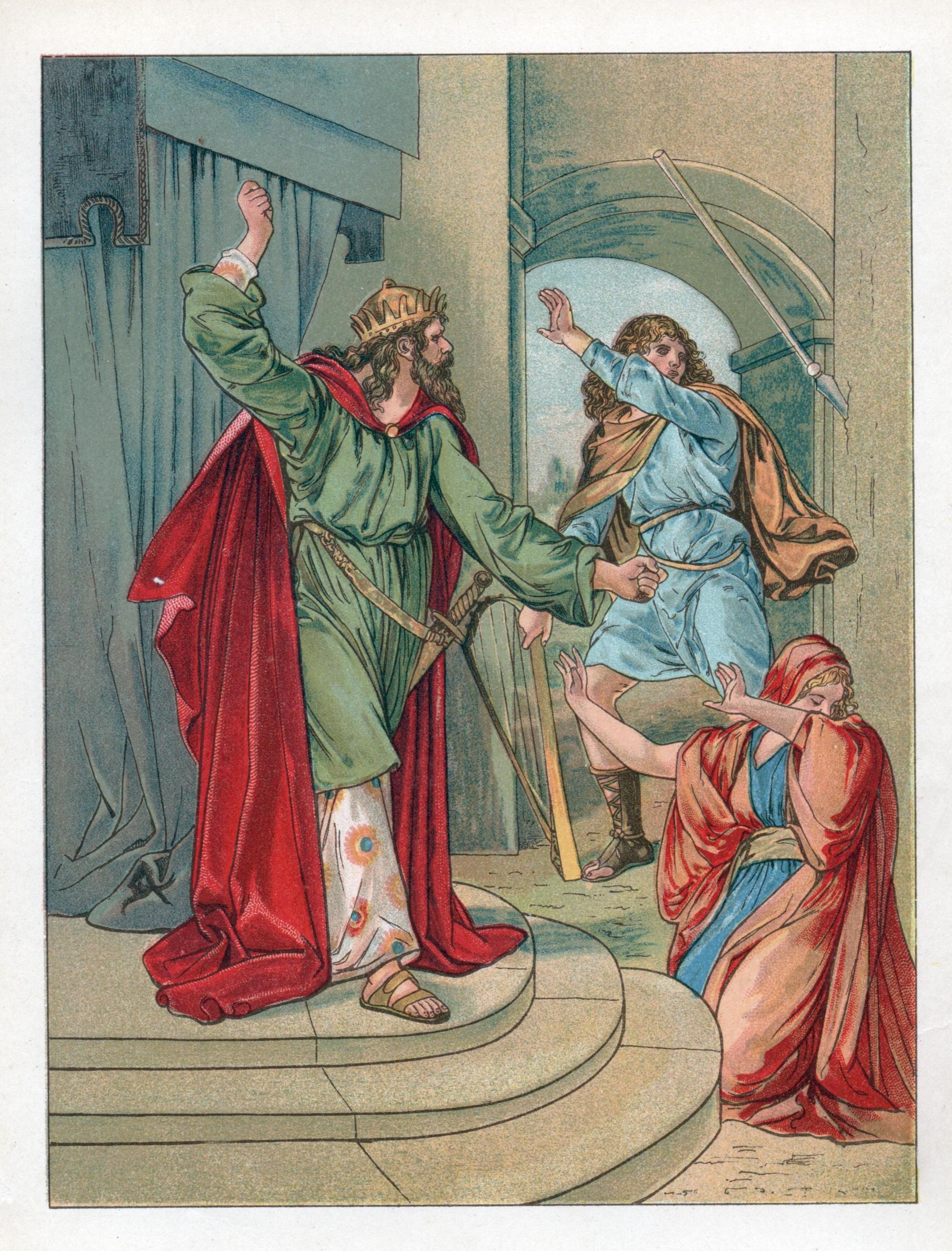
urn to the list of books given in the beginning of your New Testament.
You will see that first come the four Gospels, or glimpses of the
Saviour’s life given by four different writers. Then follows the Acts
of the Apostles, and, lastly, after the twenty-one epistles, the volume
ends with the Revelation.
Now this is not the order in which the books were written—they are
only arranged like this for our convenience.
The first words of the New Testament were written, not as we should
have supposed by one of the twelve apostles, or by some one who had
loved and followed the Lord Jesus Christ when He was upon earth. They
are written by a Pharisee who had been one of Christ’s bitterest
enemies.
Though Saul had, as far as we know, never seen the Saviour on earth,
what he had heard of His work and teaching made him feel that in
stamping out all the followers of the so-called Messiah, he would be
doing God service. But we remember how the Saviour Himself appeared to
Saul on his way to Damascus, and how his heart was changed, and his
eyes were opened.
We can scarcely imagine the transformation which came over his mind.
Together with all the other learned Jews he had considered Jesus of
Nazareth to be an impostor, and to blaspheme the words of God’s Holy
Book when He applied them to Himself. Now Saul the Pharisee understood
that he and his countrymen, not Jesus of Nazareth, were at fault. As
he read the old prophesies he understood their true meaning, ‘and
straightway he preached Christ in the synagogues, that He is the Son of
God.‘ (Acts ix. 9.)
Then the full tide of Jewish anger turned upon him. That he should
join the followers of the despised Nazarene and forsake the sacred
traditions of the Law made all the Jews scattered through the
then-known world into his bitterest enemies.
Paul, as he was afterwards called, loved his countrymen with a
passionate love. He would gladly have died for them,[1] and that he
should be unable to show them what was so clear to himself, was
certainly the greatest sorrow and disappointment of his life. But
though he was unable to help his countrymen, as a nation, God made him
the most successful missionary-traveller the world has ever known, and
to him was given the privilege of writing a large part of the New
Testament.
Before we think about his writings, however, let us look at the
condition of the great heathen cities of the world at the time when he
lived.
In the year A.D. 54, that is, twenty years after our Saviour’s death
upon the cross, the Emperor Nero, who is still remembered as one of the
worst men who ever lived, began to reign in Rome.
For many years the Roman Emperors had been masters of all the
then-known nations, and for awhile they had ruled justly; but ever as
the Roman Empire increased in power and riches, the Roman rulers grew
more haughty and selfish, until at last they cared for nothing but
their own pleasures, and spent their days in drinking and feasting,
wasting enormous sums in senseless extravagance, while thousands of
their subjects starved.
A dreadful city Rome must have been in those days, though to look at
she was beautiful indeed.
A city of marble palaces, of fair white statues and green gardens; of
huge public baths and theatres. On one side stood an enormous
building, with a round space in the centre, and tiers of seats rising
one above another like a circus. This was an amphitheatre, where shows
and performances were given.
There were no sham combats in a Roman circus; no mere pretence of being
wounded. Men fought with men in stern reality; worse still, men were
made to fight with wild beasts. Lions and tigers, and fierce bulls
tore and gored men to death, while the audience leaned back in their
comfortable seats, watching the horrible scenes intently.
Every rich man in Rome at the time of which we write owned hundreds of
slaves, who were the absolute property of their owners.
A slave-girl who arranged her mistress’s hair badly was burnt with a
hot iron. If a slave-boy broke a costly vase his master might whip him
to death, or have him thrown into a tank full of ravenous fish. There
was no limit to the master’s power.
Although millions of people had scarcely a rag to cover them, or a
crust to eat, the rich people flung their gold away on useless trifles.
Indeed, a kind of competition existed among them as to who could waste
his money the most foolishly.
‘Nightingales sing more sweetly than any other bird,’ thought one of
these. ‘I have it. I’ll order a dish of nightingales’ tongues for my
feast next week; that will be something rare and expensive indeed!’
All his friends were charmed with the new idea, and nightingales’
tongues became quite the fashion.
But all the time, in this mighty city, so black with sin, so red with
cruelty, the pure white light of the Gospel of Christ had begun to
shine.
‘Gospel’ means good news. The story of Jesus was blessed news indeed,
for the suffering, hopeless people. As yet all unnoticed by the rulers
of the heathen world, the little band of Christians was ever increasing.
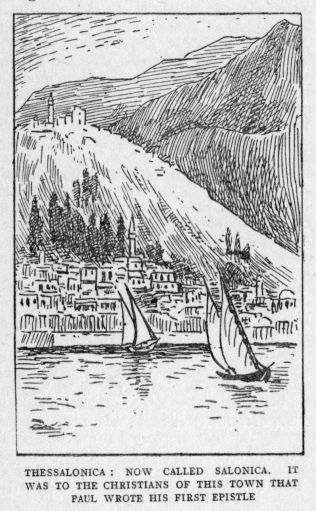
THESSALONICA: NOW CALLED SALONICA. IT WAS TO THE CHRISTIANS OF THIS TOWN THAT PAUL WROTE HIS FIRST EPISTLE
From Jerusalem the good news had spread to Rome and to numbers of other
heathen cities. The Apostle Paul had preached and gained little groups
of converts in Thessalonica and Philippi and other strongholds of evil,
and in the year when Nero became Emperor of Rome, the first words of
the New Testament were written.
It happened in this way: St. Paul was in Greece, carrying on the war
for Christ in the very centre of the idol-worshippers. Most of the
Roman ideas of the false gods had come from Greece. In Athens and
Corinth the most beautiful buildings were heathen temples, and not a
house in the whole land was without its images.
Paul had preached at Athens and Corinth, but in the very midst of his
difficult work he heard that the little band of faithful followers he
had left behind in the city of Thessalonica were in great trouble.
They had no books to help them except the Old Testament, written in
Greek. Although they had tried hard to remember his words, many things
still perplexed them. Besides, the Jews living in the city were their
bitterest enemies, and had so stirred up the people against them, that
they were in constant danger of losing their lives.
Would not their great leader tell them what they ought to believe, and
how they ought to live?
Paul loved these Thessalonians, and longed to go to them. But he could
not leave his work in Corinth. What then was he to do?
He could write a long letter to them, bidding them to ‘Stand fast in
the Lord.’ (1 Thessalonians iii. 8.) To remember that God had called
them ‘unto Holiness.’ (1 Thessalonians iv. 7.) Paul did not need to
remind them to love one another, for that God Himself had taught them.
(Verse 9.)
He told them, too, not to sorrow hopelessly for those who had died for
Christ, for when Christ returns, as He surely will, those who have
loved Him shall rise first to meet Him, and so be with Him for
evermore. ‘Wherefore, comfort one another with these words.‘ (Verse
18.)
We can imagine how eagerly the Thessalonian converts listened to the
letter. We see, too, that the first Christian document ever written
contained the full Gospel message, and that the heathen had already
‘turned to God from idols to serve the living and true God; and to
wait for His Son from Heaven, whom He raised from the dead, even Jesus,
which delivered us from the wrath to come.‘ (1 Thessalonians i. 9, 10.)
A few months later the Thessalonians were once more in great perplexity.
‘What are we to believe?’ they had asked. ‘Paul tells us plainly that
Christ will return to the earth. How can we settle down to our
ordinary work with such a wonderful hope before us?’
From the answer which the Apostle sent to their questions—which we
call to-day the Second Epistle to the Thessalonians—we can see clearly
how troubled they must have been.
In order to understand their position we must remember that the words
and acts of the Lord Jesus Christ had not as yet been written down, and
all that the Thessalonians knew about Him was from Paul’s preaching and
teaching. They could not turn to their Bibles as you can when you long
to know just what the Saviour would have you do.
So Paul wrote to them again, explaining that they must wait in
patience, quietly doing their daily work, and earning their own bread,
as he and his companions had done whilst living in Thessalonica. (2
Thessalonians iii. 12.)
Most of St. Paul’s Epistles—that is, his letters—were written in this
way because of some special need or danger.
The converts in Corinth, Galatia, or Ephesus, were in difficulty, or in
danger of losing their faith in Christ, and Paul, ever watchful, but
unable to go to them at the moment, wrote the message of comfort and
warning which God had put into His heart.
At last there came a time when Paul could visit his converts no more.
The Roman rulers were as yet not angry with the followers of Christ.
They simply despised them, and thought the Jews very foolish to trouble
about a pack of low, ignorant people. ‘They are mostly slaves or such
like whose opinions are worth nothing. Why do they not let them alone
as we do?’ said the proud Romans.
But at last so bitter had the Jews become against Paul, and so violent
were their attacks on him, that the Roman Government was obliged to
interfere. Paul was arrested in Jerusalem and imprisoned in Caesarea.
Here he remained for many months, until, at last, finding he would get
no justice from the Roman governor, he demanded to be taken to Rome
itself to the Judgment Seat of the Emperor.
Two or three years before this he had written a most wonderful letter
to the Roman Christians.
‘To all that be in Rome, beloved of God, called to be saints,‘ his
letter was addressed. He told them how he prayed for them, and how he
longed to see them ‘Making request, if by any means now at length I
might have a prosperous journey by the will of God to come unto you.‘
(Romans i. 10.)
His prayer was answered, but he came as a prisoner in the year of our
Lord 61.
Yet Paul was not put in prison when he arrived in Rome. He was allowed
to see his friends, and even to hire a lodging of his own, though day
and night he had to be chained to a Roman soldier. The soldiers were
changed when their watch expired, but never for one instant could the
Apostle go free.
Many of these Roman soldiers were hard and proud, believing in nothing
at all, not even in their own idol gods; but after a while, won by
Paul’s words and life, the soldiers learned to believe also, and became
his converts.
For the first year of his imprisonment Paul wrote little, but he spoke
and thought much; as the second year drew on he sent letters to many of
those he so longed to see again which are as precious to us as they
were to those old-time Christians.
Among these are the Epistles to the Galatians, the Ephesians, the
Philippians, the Colossians, and a touching little appeal to Philemon
concerning a runaway slave who had become one of Paul’s converts at
Rome.
We are almost certain that the Apostle was released for a time so that
he was enabled to revisit many of his converts, as he so earnestly
desired to do.
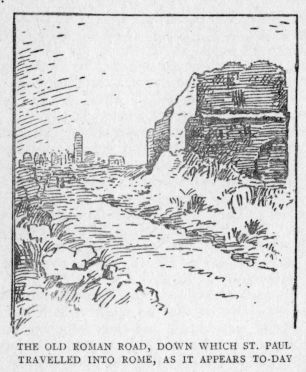
THE OLD ROMAN ROAD, DOWN WHICH ST. PAUL TRAVELLED INTO ROME, AS IT APPEARS TO-DAY
Then he was once more taken prisoner and brought again to Rome, where
Nero’s wickedness had become repulsive even to the Romans themselves,
cruel and hardened though they were.
To Timothy, who was to him as a son, Paul the prisoner wrote a farewell
letter, just when he was to be brought before Nero the second time.
‘I have fought a good fight, I have finished my course, I have kept
the faith.‘ (2 Timothy iv. 7.) So he wrote, and before he closed his
letter he begged Timothy to make a special effort to come to him, and
to bring with him ‘the books, but especially the parchments.‘ (Verse
13.)
These ‘books’ would most likely be the first copies of two or three of
the books of the New Testament, just the very beginnings. Perhaps the
life of Jesus Christ, written by Mark, and a letter or two of Peter’s;
fragile, reed-paper rolls, which would tear and crack unless they were
handled with the greatest care. These would be written just like the
ordinary books of the time, for as yet no one dreamt that they would
one day be bound up with the ‘parchments,’ and so form the Christians’
Bible. For by the ‘parchments’ Paul almost certainly meant the Old
Testament written in Greek.
He needed these very ‘specially.’ He had time to think and study now;
and the old, old Books of the Law and the Prophets spoke from the first
page to the last of his beloved Master, Jesus Christ.
Did he live to receive the parchments? We do not know. How did he
die? The Bible does not tell us. But about the date St. Paul wrote
the last of his words that have come down to us, a fierce time of trial
swept like a storm over the little Christian colony in Rome.
In his mad wickedness, the Emperor Nero set fire to his own city so
that he might watch the blaze. Half Rome was burnt, and then he grew
alarmed, for the people were furiously angry at losing their homes. So
he looked round for some one on whom to throw the blame.
In an evil hour he thought of the Christians. ‘The Christians plotted
to destroy my city—death to them! Drag them from their houses, burn
them, throw them to wild beasts!’
The order went forth, the excited people were only too ready to obey,
and so the Lord’s faithful followers were put to death by hundreds.
Nero prided himself on inventing the most horrible tortures for them.
On one dreadful night he even caused a number of living men and women
to be wrapped in cloths soaked in pitch, tied to the top of long poles,
and then set on fire. This horrible deed was carried out in Nero’s own
beautiful gardens, which were thus all lighted up with the glare of the
flames.
But nothing could shake the faith and courage of these saints and
warriors.
‘As it is written, For Thy sake we are killed all the day long.‘
(Romans viii. 36.) But they feared none of these things; they were
faithful unto death, and the Lord has given them a crown of life.
(Revelation ii. 10.)
[1] Romans ix. 3.
CHAPTER XI
HOW THE GOSPELS CAME TO BE WRITTEN
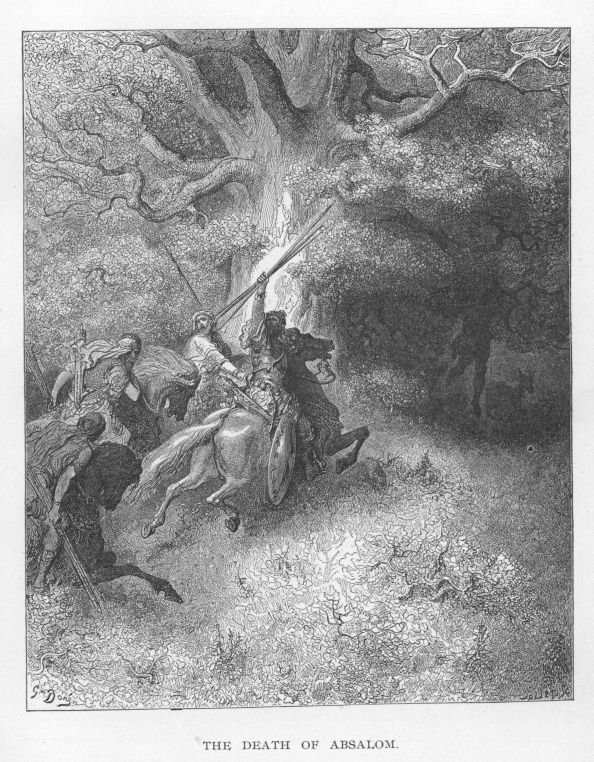
ut how did the story of the Saviour’s life on earth come to be written?
We have seen that many years passed before any one thought of writing
it down at all. The men and women who had really seen Him, who had
listened to His voice, looked into His face, and who knew that He had
conquered death and sin for evermore, could not sit down to write, for
their hearts were all on fire to speak.
But as the years passed, the number of those who had seen Christ grew
less, and the need of a written Gospel became ever greater. Precious
words would be forgotten, precious facts passed over, unless they were
collected together and put down in black and white. Some of those,
therefore, who had seen and heard Christ began to write down all they
remembered of His life.
They had no thought, as yet, of a New Testament being added to their
Bible; the Old Testament Scriptures were still the ‘Bible'[1] to them.
These early Christians, as we remember, did not read the Bible in the
original Hebrew, but in its Greek translation. They loved it and
searched its pages eagerly, as they realized that all its words spoke
of Christ!
But about the time that St. Paul was imprisoned at Rome we think that
the Gospel according to St. Mark was written.
Most of you know that Mark was a young Jew who began his work for God
by travelling with Paul and Barnabas (Acts xii. 25), but who left them
when the work grew dangerous. (Acts xiii. 13.) Paul was so grieved at
his failure, that for a while he refused to trust him again; but
Barnabas, who believed in his repentance, gave him another trial.
(Acts xv. 37-39.) That Mark proved himself even to Paul we find from
the Apostle’s last Epistle to Timothy, when he writes: ‘Take Mark, and
bring him with thee: for he is profitable to me for the ministry.‘ (2
Timothy iv. 11.)
Before that time, however, Mark had lived and worked for many years
with the Apostle Peter, who in his letter written from Babylon speaks
of him as ‘Marcus my son.’ (1 Peter v. 13.)
Now a Christian writer, named Papias, who lived about sixty years after
this time, tells us that Mark wrote his Gospel story from what Peter
had told him about Christ; so we think this Gospel writing is really
the Apostle Peter’s account of our Lord’s life on earth.
Very likely, as Mark journeyed with the Apostle from place to place,
and heard him tell and retell the wonderful story of His Master’s life
on earth, the thought came into the young man’s mind, ‘Why not write
down what Peter says, so that his words shall not be forgotten?’
And so fresh and vivid are the words of Mark’s Gospel, so full of
little natural touches, that most people agree that old Papias must
have been right. The very things St. Peter would have noticed are
mentioned by Mark.
Matthew, the writer of the Gospel which comes the first in our New
Testament, was a Levite; that is, he belonged to the tribe of Levi, and
this tribe was specially chosen in the time of Moses to learn the Law
and serve God in His Temple. Matthew, therefore, was very learned in
the books of the Law, and in the writings of the old prophets. As you
all know, the Lord Jesus chose Matthew to be one of His special
companions; and as Matthew followed his Master day by day, he saw more
and more clearly how all the old prophecies which he knew so well
pointed to the coming of Christ.
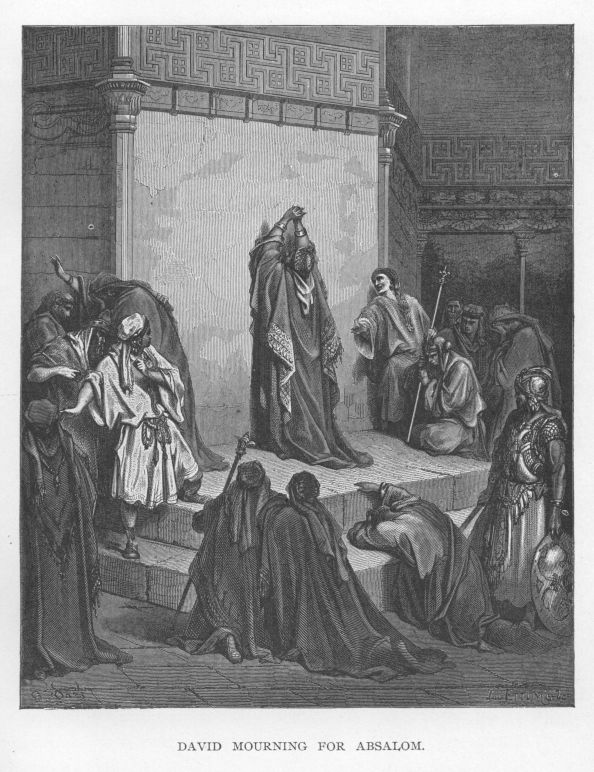
A FRAGMENT OF PAPYRUS-PAPER WITH ANCIENT WRITING
So, when the Holy Spirit called Matthew to write what he knew of the
Lord’s life on earth, those ancient prophecies, and the wonderful way
in which they had come true, were still in his thoughts. This is why
we find in the Gospel according to Matthew more quotations from the Old
Testament than in the writings of any of the other evangelists.
‘See, My Book has always spoken of the coming of My Son.’ This is the
wonderful message which God gave to the world through Matthew’s
knowledge of the Old Testament Scriptures.
Years passed, and those who had seen Christ in His earthly life had
nearly all died, while Gentile Christians everywhere were asking
eagerly for the written story of His life.
Twenty years after Matthew’s Gospel was written, God called a Greek
scholar, named Luke, to write what was to be a most important part of
our Bible. The Jews of old hated and despised the Gentiles; we have
seen how bitterly they persecuted Paul because he declared that God had
sent him to preach to the heathen nations; think, therefore, how
impossible it would have seemed to a Jew of this time, that a Gentile
could, at God’s bidding, write two Books which should become even more
precious and sacred than the Books of the Law, which the Jews rightly
prized as the greatest treasure of their nation!
Those who work in heathen lands to-day tell us that the Gospel of St.
Luke is always the favourite book of the converts, and that if they can
only afford to buy one Gospel they always ask for that of Luke. This
is because the whole work is written from the Gentile point of view—it
is the world’s history of Christ.
St. Luke wrote his Gospel as an historian, and in dedicating his work
to Theophilus[2] in a kind of preface, he followed the Greek custom.
‘Many,‘ he says, ‘have taken in hand to set forth in order a
declaration of those things which are most surely believed among us‘
(Luke i. 1), but their records have disappeared, while that of Luke
remains.
He was a physician, as we know (Colossians iv. 14), and besides being
highly educated and gifted, he took infinite pains with his work. He
collected all the information he could both from books and
eye-witnesses—either from the Saviour’s Mother herself, or from some
of her relations—and to him we owe many of the most beautiful and
touching facts of our Lord’s life on earth.
Written last of all, we have the good news—that is, Gospel, told by
St. John.
When the Saviour ascended into Heaven, John was still a young man, but
he lived to be older than all the other Apostles. By the time that St.
John wrote his Gospel, Jerusalem had been destroyed and her inhabitants
slain or scattered. He was able, therefore, to mention details, and
give the actual names of people and places, which, if told earlier,
might have endangered the lives of those of whom he wrote.
Many instances of this will be found by those who read carefully. He
alone mentions the name of the Apostle who struck off the ear of the
High Priest’s servant, and the story of the raising of Lazarus is given
only by St. John as though it would have been dangerous to record it
earlier.
So filled with love was the Apostle John that before he died his spirit
became altogether one with Christ’s spirit, and the sayings of Jesus,
which he had only half understood whilst his Master had walked this
earth, grew quite clear to him, so that he remembered them distinctly.
Therefore, that others might understand also, God’s Spirit called John,
when he was an old man, to write out those precious words of Jesus
Christ’s which were always echoing in his heart, and which the other
writers had not known, or had forgotten. It is in John’s Gospel that
we learn most about the love of Christ.
Matthew, Mark, Luke, and John—let us thank God for them all.
[1] The name ‘Bible’ is derived from the Greek word ‘Byblus,’ i.e.
‘Papyrus,’ the paper reed on which the New Testament was written.
[2] The name ‘Theophilus’ means ‘God’s friend.’ Most people believe
that he was a notable convert of those days, though unknown to history.
CHAPTER XII
SOME OTHER WRITERS OF THE NEW TESTAMENT
et us now look at the rest of the books which make up the New
Testament. In the days when Paul preached at Athens, the old capital
of Greece, much of the ancient splendour and power of the Greek people
had passed away, for the Romans had conquered their country, and they
were no longer a free nation.
Yet, although the Greeks had been forced to yield to Rome, their
conquerors knew that the Grecian scholars and artists were far better
educated and more highly gifted than themselves, and Greek statues and
writings had therefore become the fashion throughout the Roman Empire.
Indeed, many of the Greek sculptors and authors are remembered and
admired to this day. Homer, the greatest Greek poet, who lived about a
thousand years B.C., is still world famous.
Homer’s best-known poem[1] is about a terrible war which took place
between the Greeks and the Trojans. Its words are noble, and its
descriptions very clever, but although all must admire the beauty of
the lines, the poem produces a dismal and depressing effect.
The picture it gives of the old heathen religion is terrible, for Homer
described the ‘gods’ and ‘goddesses’ in whom he believed as being far
more cruel and unjust than the worst men and women of his time.
According to his ideas, Jupiter, Diana, Apollo, Mars, and the rest came
down to earth and took part in the battle.
In vain did the great hero, Hector, fight his bravest; in vain did he
sacrifice himself, and strive to make up for the wrong-doing of his
brother; he failed utterly, for Homer tells us that he was hated by
some of the ‘gods’ for no fault of his own, and so they doomed him to
destruction, and guided the hand of the man who slew him. How little
those clever Greeks had been able to discover of the mercy and justice
of God!
But although the men of this great nation knew nothing of our wise and
loving Heavenly Father, He knew and loved them every one, and as we
have seen, He called a Greek Christian author to help Him in the
wonderful work of writing the Bible.
In addition to the story of our Saviour’s life this Greek author, St.
Luke, also wrote a book about a war—a war that was to become
world-wide—the war against sin and the Devil, and the name of this
second book is the ‘Acts of the Apostles.’
In all this wonderful Bible of ours there is no Book more wonderful
than the ‘Book of the Acts.’ Have you ever stopped to think what a
terrible gap there would be in the history of God’s dealings with the
world had the ‘Acts’ never been written?
The Apostle Paul’s life would be almost a blank. Stephen’s victorious
death would be all unknown to us. Above all, the story of our
Saviour’s ascension into Heaven, and the marvellous fulfilment of His
promises in the gift of the Holy Spirit at Pentecost, would have been
left untold.
The Book of the Acts stands alone.
There are four Gospels—written from four different points of view, but
of the four writers, Luke, the Greek, was the only one who wrote a
sequel and showed the results which our Saviour’s Life, and Death, and
Resurrection produced at once in the world.
The marvellous accuracy of St. Luke and his keen observation become
every year more striking as fresh discoveries in the lands of which he
wrote show how true he is in the tiniest detail; while his modesty is
equally remarkable, for only by carefully noticing when he says ‘we’
and when ‘they’ can we discover when he shared St. Paul’s dangers and
trials.
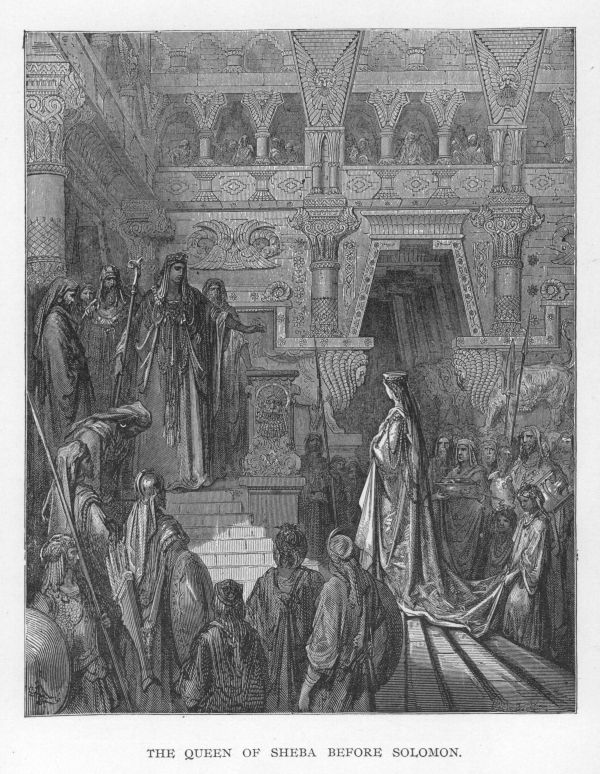
VERY ANCIENT FRAGMENT OF A PAPYRUS ROLL, WITH PORTIONS OF THREE PSALMS WRITTEN IN GREEK
‘Only Luke is with me‘ (2 Timothy iv. 11) wrote the Apostle from his
Roman prison. The beloved physician was faithful to his great leader
to the last.
How did Luke write, and what did his two books look like when he had
finished them? He wrote on papyrus—that is, on reed paper, using an
ink like black paint, and a reed pen.
As far as we know no portions of the Bible-books of this date are left
in the world, but in the beginning of the year 1911 a large number of
very ancient fragments of Bible-books were discovered in Upper Egypt,
and with these was part of a translation of Luke’s Book of the
Acts—just shreds and tatters of fragile papyrus paper, the remains of
what is up till now the oldest copy of the New Testament in the world.
Amongst the ancient manuscripts kept in the British Museum are old old
copies of Homer’s War poems, and here also are stored the precious
fragments of the chronicles of that other great Greek writer—St. Luke.
Homer’s book belongs to the forgotten past, for the heathen religion of
Greece is to-day as though it had never been.
But the writings of St. Luke are as full of blessing and power as ever,
and the war he wrote about grows more wonderful every day. For Christ,
the Son of God, came down from Heaven not to fight against men as the
false gods of the old Greeks were supposed to have done, but to fight
and conquer for men, to lift up the fallen, and to win for the
victors a crown of deathless glory.
The Apostle Peter, in contrast to St. Luke, was only a fisherman when
the Lord bade him leave his boat and his nets to preach and teach the
Gospel.
His ideas were very limited when Jesus Christ first came into his life,
and he knew little or nothing of the various branches of knowledge
which had become a second nature to the Greek scholar; but the
fisherman was to receive his education in a very different fashion from
Luke, for his teacher was the Lord Jesus Christ Himself.
How impossible it would have seemed to Peter, in the days when he
washed his nets by the Lake of Galilee, that his writings should ever
form a part of the Scriptures—God’s Book, which he had learned from
his childhood to love and reverence!
Yet with God all things are possible.
Not only did the Apostle Peter write a part of the Bible, but that
short book known as the ‘First Epistle of Peter,’ is one of the most
frequently mentioned by all the earliest Christian writers—those
authors and teachers who had seen the Apostles, and had heard from
their lips the story of the Saviour’s life on earth. Thus it is that
Peter’s contribution to our Bible has become one of the strongest
witnesses to the truth of the words written down in the Gospels. There
is no possibility of a mistake; the man who wrote this Epistle could
have been none other than the Apostle Peter who had been with the Lord
from the beginning of His public work.
And it is very beautiful to trace throughout Peter’s writings the
echoes of the great facts which he had seen, and which to the end of
his days formed the background of all his thoughts.
Christ had given him his name ‘Peter’ or ‘Cephas,’ that is, a rock or
stone, and so he wrote of his Master as the great Corner-stone of God’s
spiritual house, in which each one of Christ’s people are living
stones, (1 Peter ii. 5-7.)
The Saviour had once told Peter that he must forgive his brother
although he was wronged by him on seventy-times seven occasions, and in
Peter’s Epistle we read, ‘Above all things have fervent charity among
yourselves: for charity shall cover the multitude of sins.’ (1 Peter
iv. 8.) ‘Charity’ should have been translated ‘love.’
Then the Lord had warned Peter that Satan had desired to have him, and
he—remembering that solemn fact in his own life—tried to put his
readers on their guard against the great enemy, ‘because your
adversary the Devil, as a roaring lion, walketh about, seeking whom he
may devour.‘ (1 Peter v. 8.)
Most touching of all are the words he wrote: ‘For what glory is it,
if, when ye be buffeted for your faults, ye shall take it patiently?
But if, when ye do well, and suffer for it, ye take it patiently, this
is acceptable with God … because Christ also suffered for us, leaving
us an example.‘ (1 Peter ii. 20, 21.) The man who had seen the Lord
Jesus Christ suffer patiently could never forget.
‘Feed the flock of God which is among you…. And when the Chief
Shepherd shall appear, ye shall receive a crown of glory.‘ (1 Peter v.
2, 4.) His Master’s last command by the Lake of Galilee to feed His
flock was so deeply impressed on Peter’s mind that it coloured all his
thoughts to the last day of his life. (John xxi.)
This Epistle of St. Peter was written, we believe, to comfort God’s
people under the heavy trial of Paul’s second imprisonment. Cruelty
and persecution were doing their worst, but God was above all.
‘Beloved, think it not strange concerning the fiery trial which is to
try you … but rejoice, inasmuch as ye are partakers of Christ’s
sufferings.‘ (1 Peter iv. 12, 13.)
Two short, but very beautiful, epistles are believed to have been
written by two of the Lord’s brethren, St. James and St. Jude.
Eusebius, the first Christian historian—born 260 A.D., died 340—tells
us that James was a Nazarite. This means that he had taken the old
Jewish vow of special purity; he ate no meat, drank no wine, and wore
nothing but white linen garments. This vow is often mentioned in the
Old Testament. James had not believed that Jesus Christ was the
Saviour of the world until after His Resurrection, when the Lord
appeared to him. ‘After that, He was seen of James.‘ (1 Corinthians
xv. 7.)
This set his doubts at rest for ever, and St. James too was called to
write a part of God’s Book.
Of St. Jude, author of the Epistle of that name, scarcely anything is
known, but from Matthew xiii. 55 and Mark vi. 3 we learn that he was
one of the Lord’s brethren, and, like his brother, James, did not
believe that Jesus Christ was the Messiah until after the Resurrection.
This Jude must not be confused with the Apostle Jude.
These writers of the New Testament as they took their reed pens in
their hands, and spread out their rolls of whitey-brown papyrus-paper,
were not like Moses. True, they knew that the Holy Spirit was bidding
them write, but that their written words should ever be used by God to
form a part of the Bible would have seemed impossible to them all.
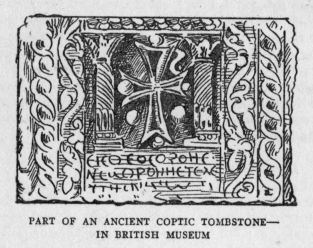
PART OF AN ANCIENT COPTIC TOMBSTONE—IN BRITISH MUSEUM
The last and by far the latest writer of God’s Book was St. John, the
beloved disciple.
Long after most of the other Apostles were dead, he still lived on,
speaking and writing of his Master, and to the Apostle John the Lord
Jesus Christ entrusted the record of many of His most beautiful and
comforting words, and of the deepest and most spiritual teaching in the
whole Bible.
Three of the shortest and yet most beautiful Books of the Bible are the
three epistles which bear John’s name. They are supposed to have been
written from Ephesus, in John’s latter days, and every sentence in them
seems to breathe forth the peace, love, and wisdom of a very old man
who has lived close to Christ for many years. It may well be then that
these calm and loving letters were the last of all the Bible words to
be written.
Now the ‘Revelation,’ though placed at the end of our Bible, was not
the last Book to be written.
It was probably composed whilst Nero, the wicked Emperor, was torturing
and burning the followers of Christ. St. John’s heart must have been
ready to break with distress, but the Holy Spirit comforted him, and
lifted his thoughts right up to Heaven, showing him in a vision the end
of all these things.
Among the fragments of the oldest Bibles in the world recently
discovered, the Book of Revelation takes a prominent place. Some of
these were probably written about the year 150 A.D. Let us remember
when we look on the faded pages lying in the British Museum that when
their discoloured lines were fresh and clean, men were still living who
had seen the early martyrs die.
[1] The Iliad.
CHAPTER XIII
THE FIRST BIBLE PICTURES
hose boys and girls who love their Bibles are fond of Bible pictures.
Even tiny children delight to see a picture of Jesus Christ holding the
little ones in His arms; and how sad children feel when they are shown
a painting or engraving of the Saviour led away to die!
We have learnt much now of the Bible, and of how the Old and New
Testaments were written, but who first thought of making pictures from
the Bible?
We shall see.
A few miles from the city of Rome, deep, deep underground, are those
wonderful networks of galleries and chambers called ‘The Catacombs.’
‘Catacomb’ means ‘scooped out.’ Miles and miles of passages are there,
some low and narrow, others wide and lofty; they cross and re-cross
each other, like the streets of a town, and all are scooped out of the
solid earth.
On either side of every gallery are almost endless rows of spaces
hollowed out in the walls, one above another like the berths on board
ship. For the most part they are open and empty, but a few are still
closed. Above some of them words are faintly traced on stone slabs; a
man or woman’s name perhaps, oftener still the Latin words, ‘In
Pace‘—that is, ‘In Peace.’
For all this great underground city is in reality one huge cemetery:
the quiet resting-place where the first Christians of heathen Rome
buried their dead, where the martyred bodies so cruelly tortured by
Nero were laid at last. In pace, in peace.
How wonderful to read the names of those who loved Christ and suffered
for His sake so long, long ago! Their very names speak to us of the
courage and joy which, in spite of torture, Christ had brought into
their lives.
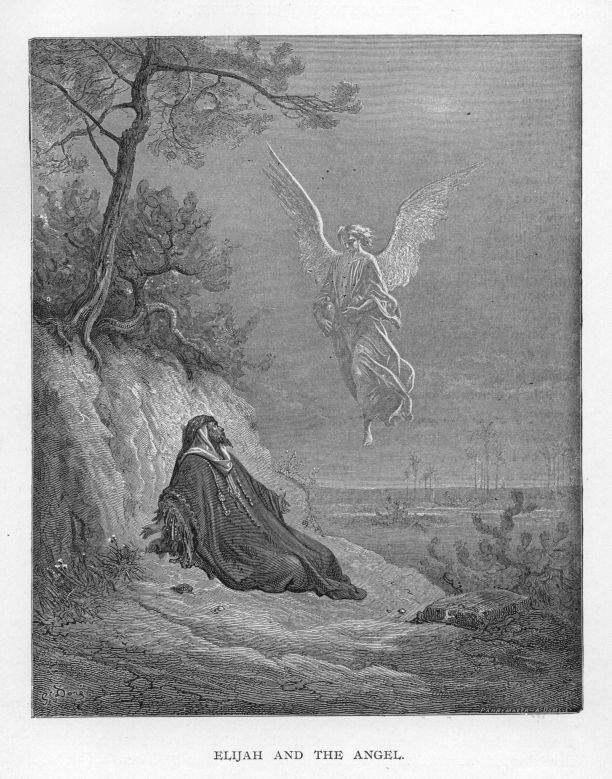
TWO EMPTY TOMBS IN THE CATACOMBS, THE LOWER ONE SHOWING PART OF THE COVERING SLAB WITH A ROUGH CARVING OF THE MARTYRS’ PALM OF VICTORY
‘Rest,’ ‘Constancy,’ ‘God’s will.’ Many names have meanings like
these. Sometimes a simple picture of a victor’s crown or martyr’s
palm-branch is placed beside them; sometimes a few words are added.
Latin is a dead language now, but in those days it was the everyday
language of Rome, so most of these inscriptions are in Latin.
Some of them are sorrowful, for the mourners grieve to think that the
loved one will open his eyes on earth no more; but in all the hope of
eternal life is sure and certain. Our beloved mother, our little
child, our dear brother is with Christ; the parting is only for a time.
Yonder, in our beautiful Heavenly Home, we shall meet once more.
How different from the words carved over heathen tombs! We know what
these were like, for not very far away is a heathen catacomb.
‘Valeria dormit in pace.‘ Valeria sleeps in peace. So the Christian
woman was laid to rest.
‘I lift up my hands against God, who snatched me away.’ We can still
read these despairing, rebellious words on a heathen tomb.
‘Spare your tears, dear husband and daughter, and believe that it is
forbidden to weep for one who lives in God.’ How beautiful to know
that we shall one day meet the woman in Heaven of whom these words are
written!
Now, about the time of Nero’s cruel persecution, the Christians of Rome
began to use the Catacombs for meetings and services. Their heathen
tormentors had a horror of death, and therefore among the quiet dead
the Christians were safe for a while.
So they met deep underground in the dim galleries, their little
oil-lamps twinkling like stars, and there they listened to the Word of
God, and prayed and sang together.
Many touching stories are told of these days; and of the meetings held
underground in these Catacombs, where the living were surrounded by the
bodies of the martyred dead.
Now, these first Christians loved the Bible with all their hearts, and
just as you like to see hanging in your room the picture of the Good
Shepherd with the little lamb, so they began to long for pictures from
their Bible. Every heathen Roman had his house decorated with pictures
and carvings from his pagan religion, but it was in the dim underground
galleries that the first Bible pictures appeared.
Some of the subjects were taken from the Old Testament, some from the
New. Only Bible pictures interested the first Christians.
Noah and the Ark was a very favourite subject. ‘Noah was safe in the
ark,’ they said, ‘although thousands perished. So will God keep safe
all those who trust in Him.’
There are many pictures of Jonah and the whale, and one of the three
children in the burning fiery furnace, for this had special messages
for the martyrs as we can well understand.
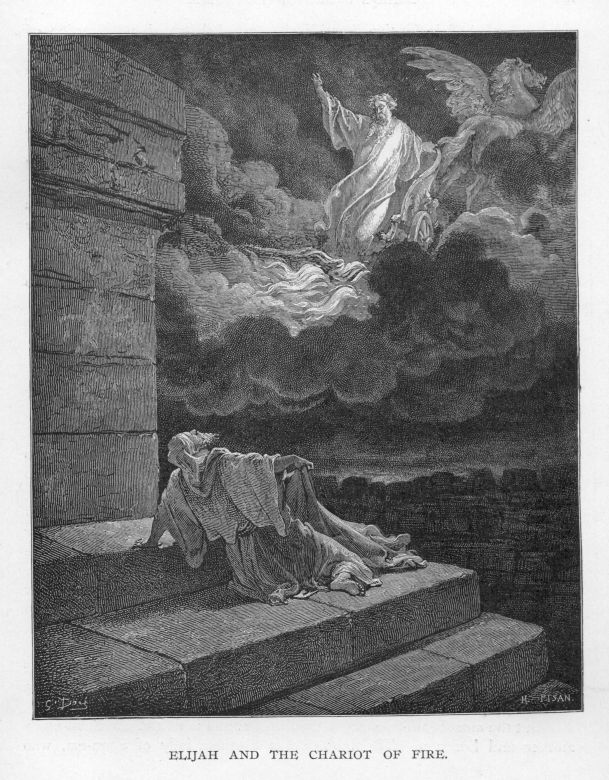
ONE OF THE FIRST PICTURES EVER MADE OF ‘CHRIST, THE GOOD SHEPHERD.’ FOUND IN THE CATACOMBS, THE FIRST CHRISTIAN CEMETERY
Another very touching picture is of the raising of Lazarus. The artist
who carved this had once been a heathen; perhaps in former days he had
made and sold idols, but now all his life and talents were consecrated
to God.
And here carved in stone, is the Good Shepherd, Christ bearing the lost
lamb on His shoulder, just as He does in the picture you love so well
at home; Christ, the Good Shepherd of your life, just as surely as He
was the Saviour and Friend of these men and women who fell asleep so
long ago!
Here is a picture of Jesus feeding the five thousand with the loaves
and fishes; in this carving He is changing the water into wine; here,
carved on a small panel, let into a tomb, is a Roman soldier crowning
our Lord in mockery; and here is Pilate washing his hands in the vain
hope that he could wash away his responsibility.
Now, there is one very wonderful thing about all these pictures:
although so many martyrs lie buried here, nearly all the pictures and
inscriptions are cheerful!
The heathen Roman writers tell a great deal about the dreadful
sufferings of the Christians, but there is very little said about it on
the tombs of the martyrs themselves. In peace; they are at peace: the
torture, the shame is over for ever; the life of love and joy and
victory is all before them.
How thoroughly these first Christians knew their Bible! How they loved
to picture its scenes. Had all the writings of the New Testament been
lost, we should have known the most important events of our Lord’s life
on earth from these faded paintings and worn carvings alone.
Love, joy, peace; the love of Christ from which nothing can separate
us; the joy which even the fires of martyrdom cannot quench; the peace
which the world does not give, and cannot take away. This is the
message which these first Bible pictures bring to us all. For to the
early martyrs the Bible was what God intends it should be to us—a
living power, a Divine Voice, a constant source of strength and
inspiration on the heavenward journey.
Copyright 2008. Bibles Net. Com. All Rights Reserved.